

How to Remove Limescale From Showerheads
Table of Contents
- Why Limescale Builds Up on Showerheads
- What You'll Need Before You Start
- How to Clean a Showerhead With Vinegar
- How Long to Soak a Showerhead in Vinegar
- How to Descale a Showerhead Without Removing It
- How to Remove Thick Limescale From a Showerhead
- Preventing Limescale Buildup After Cleaning
- Common Mistakes to Avoid
- Frequently Asked Questions
Last Updated: October 10, 2026
Why Limescale Builds Up on Showerheads
Limescale accumulates on showerheads because of minerals in your water. Hard water contains calcium and magnesium. When water heats up and evaporates, these minerals stay behind as crusty deposits.
The problem gets worse over time. Blocked spray nozzles reduce water flow and create uneven spray patterns.
According to water quality research from the USGS, hard water affects millions of homes across the country. If you notice white or yellowish crusty buildup on your fixtures, you likely have hard water. The Water Softener Company helps homeowners address this issue at the source by treating water before it reaches your plumbing.
The good news: learning how to remove limescale from showerheads is straightforward. Most deposits come off with simple household items you already have.
What You'll Need Before You Start
Gather these supplies before you begin cleaning:
- White vinegar (distilled vinegar works best)
- A bucket, bowl, or plastic container large enough to submerge the showerhead
- A zip-top bag (optional, for attached showerheads)
- A soft cloth or sponge
- An old toothbrush or soft-bristled brush
You don't need expensive descaling solutions. White vinegar is effective, affordable, and safe for most showerhead materials. Distilled vinegar is preferred because it contains fewer additives than regular vinegar.
Material Compatibility and Safety
Before you start, identify your showerhead material. Different finishes require different precautions:
Chrome and stainless steel: Vinegar is safe and effective. These materials resist acetic acid well. Soak freely for up to 12 hours without risk of damage.
Plastic and rubber nozzles: Vinegar is safe, but prolonged soaking (beyond 8 hours) can sometimes soften rubber seals.
Brass and bronze: Vinegar can dull or discolor these metals over time.
Coated or specialty finishes: Matte, powder-coated, or oil-rubbed bronze finishes are vulnerable to vinegar.
Rubber washers and seals: Vinegar can degrade rubber components if exposed for more than 12 hours continuously.
Safe Handling and Ventilation
White vinegar is non-toxic, but proper handling prevents irritation:
- Wear rubber gloves if you have sensitive skin or will be handling vinegar for more than 15 minutes
- Ensure good bathroom ventilation, open a window or run the exhaust fan during and after soaking
- Never mix vinegar with bleach, hydrogen peroxide, or other cleaners; toxic chlorine gas can form
- If vinegar splashes in your eyes, rinse immediately with water for at least 15 seconds
- Store vinegar in a cool, dark place away from children and pets
How to Clean a Showerhead With Vinegar
Vinegar dissolves limescale through a chemical reaction. The acetic acid breaks down mineral deposits without harsh scrubbing. This method works for both removable and attached showerheads, though the process differs slightly.
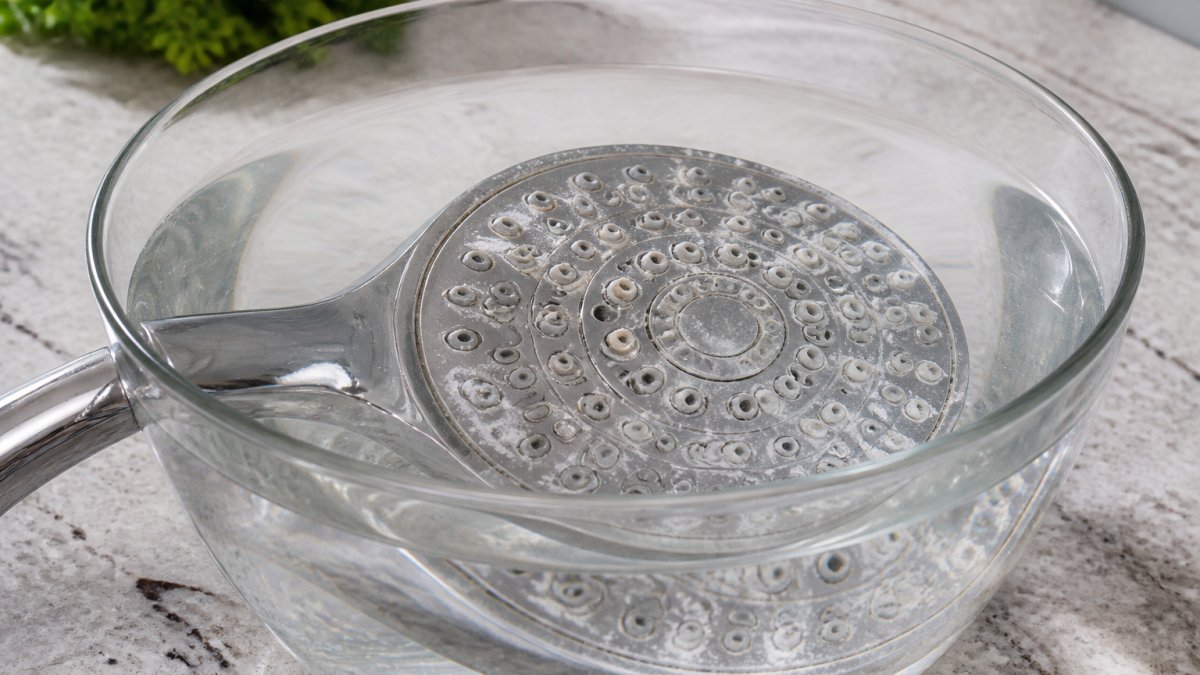
For Removable Showerheads
Removing your showerhead makes cleaning easier and more thorough. Most showerheads unscrew by hand or with a wrench.
Steps to follow:
- Unscrew the showerhead by turning it counterclockwise by hand
- If it's stuck, wrap a cloth around it and use a wrench for grip
- Fill a container with white vinegar
- Submerge the showerhead completely
- Let it soak (see soaking time section below for duration)
- Use a soft brush to gently remove loosened deposits
- Rinse thoroughly with warm water
- Screw it back onto the shower arm
Removable showerheads allow you to reach every angle and clean the interior components where mineral buildup hides.
For Attached Showerheads
Fixed showerheads require a different approach since you cannot remove them. This method works well and avoids any risk of damaging the connection.
Steps to follow:
- Fill a zip-top bag with white vinegar
- Slide the bag over the showerhead
- Use a rubber band to secure it in place
- Leave it overnight or for several hours
- Remove the bag carefully
- Use a soft brush to scrub away loosened deposits
- Rinse with warm water for several minutes
This bag method keeps vinegar in contact with the showerhead without needing to remove it. The vinegar soaks into all the nozzles and crevices where limescale hides.
How Long to Soak a Showerhead in Vinegar
Soaking time depends on how much limescale has built up. Light deposits need less time. Heavy buildup requires longer exposure.
General soaking guidelines:
- Light limescale: 30 minutes to 1 hour
- Moderate buildup: 2 to 4 hours
- Heavy deposits: 4 to 8 hours or overnight
Overnight soaking is safe and often most effective.
Do not exceed 24 hours of continuous soaking.
How to Descale a Showerhead Without Removing It
Sometimes removing your showerhead is not practical or possible. You can still clean it effectively in place.
Method for attached showerheads:
- Turn off the water supply to the shower
- Mix equal parts white vinegar and warm water in a spray bottle
- Spray the solution directly onto the showerhead
- Let it sit for 15 to 20 minutes
- Use a soft brush to gently scrub the nozzles
- Spray again with the vinegar solution
- Scrub a second time to loosen stubborn deposits
- Turn the water back on and rinse thoroughly
This spray-and-scrub method works for light to moderate limescale. It takes longer than soaking but avoids any risk of loosening the showerhead connection.
For better results with this method, repeat the spray-and-scrub cycle two or three times. Each cycle loosens more deposits. After the final scrub, run hot water through the showerhead for at least one minute to rinse away all vinegar and dissolved minerals.
How to Remove Thick Limescale From a Showerhead
Heavy mineral buildup requires more aggressive treatment. Standard soaking may not fully dissolve thick, crusty deposits. Before escalating, understand which descaling method works best for your situation.
Comparing Descaling Methods for Stubborn Deposits
White vinegar (acetic acid, 4-8% strength)
- Best for: Chrome, stainless steel, and plastic showerheads; most common household option
- Effectiveness: Dissolves moderate to heavy limescale in 8-12 hours; works on mineral deposits but slower on extremely thick buildup
- Soaking time: 8-12 hours minimum; overnight (12 hours) often optimal
- Safety: Safe for most materials; avoid on brass, bronze, or coated finishes
- Cost: $2-$4 per gallon; economical for regular use
Citric acid (powder form, typically 50-100% concentration)
- Best for: Heavy buildup; brass and specialty finishes (gentler than vinegar); hard-water areas
- Effectiveness: Dissolves thick, stubborn deposits faster than vinegar; more powerful on mineral-heavy water
- Soaking time: 4-6 hours for heavy buildup; often faster than vinegar
- Safety: Safe for all common showerhead materials; less likely to dull finishes
- Cost: $3-$8 per container; more expensive per use than vinegar but more concentrated
Baking soda paste (sodium bicarbonate)
- Best for: Coated finishes, delicate materials, and light-to-moderate buildup; safest option for specialty showerheads
- Effectiveness: Mild abrasive action combined with chemical dissolution; slower than vinegar or citric acid on heavy deposits
- Application time: 30 minutes to 2 hours; does not require overnight soaking
- Safety: Non-toxic, non-corrosive; safe for all materials including rubber seals
- Cost: $1-$2 per box; most economical option
- Drawback: Less effective on extremely thick buildup; requires manual scrubbing
Steps for Stubborn Limescale Using Vinegar or Citric Acid
- Soak the showerhead in vinegar (8-12 hours) or citric acid solution (4-6 hours) minimum
- After soaking, use a soft-bristled toothbrush to gently scrub each nozzle
- For extremely stubborn deposits, soak again for another 4-6 hours
- Try using a small wooden toothpick or plastic pick to carefully dislodge deposits from nozzle openings
- Avoid metal picks or sharp objects that could scratch or damage the showerhead
- Rinse with hot water between attempts
Using Baking Soda for Delicate Finishes
If your showerhead has a coated or specialty finish, baking soda is safer:
- Mix baking soda with a small amount of water to form a thick paste (consistency of peanut butter)
- Apply the paste directly to nozzles and mineral deposits
- Let it sit for 30-60 minutes
- Use a soft brush to gently scrub the paste into the deposits
- Rinse thoroughly with warm water
- Repeat if necessary; baking soda is safe for multiple applications
When to Consider Replacement
If after two full soaking cycles (16-24 hours total) and scrubbing the showerhead still has severely restricted flow or uneven spray, the internal filter may be permanently blocked or the showerhead may be damaged. At that point, replacement is more practical than continued cleaning.
Preventing Limescale Buildup After Cleaning
Once you've removed limescale, keeping it from returning saves time and effort. Prevention is far easier than cleaning.
Effective prevention strategies:
- Wipe down your showerhead weekly with a dry cloth after use
- Keep bathroom humidity low by running the exhaust fan during and after showers
- Consider installing a water softener to treat hard water at the source
- Clean your showerhead monthly with vinegar spray as maintenance
- Use a showerhead filter designed to reduce mineral deposits
The Water Softener Company addresses the root cause of limescale by softening your water before it reaches your plumbing.
Regular maintenance prevents heavy buildup from forming. A quick monthly vinegar soak keeps your showerhead functioning at full capacity. This small effort extends your showerhead's lifespan and maintains strong water pressure.
Common Mistakes to Avoid
Learning what not to do prevents damage and frustration.
Mistakes to watch for:
- Using hot vinegar: cold or room-temperature vinegar works just as well and is safer to handle
- Soaking for more than 24 hours: extended soaking provides no benefit and wastes vinegar
- Using metal tools or harsh brushes: these scratch and damage showerhead finishes
- Forgetting to rinse thoroughly: leftover vinegar smell lingers if not fully rinsed away
- Ignoring the water supply valve: always turn off water before attempting removal to avoid leaks
- Assuming all showerhead materials are vinegar-safe: test on inconspicuous areas first with specialty finishes
Many people also make the mistake of treating limescale as a permanent problem requiring replacement.
Another common error is assuming that how to remove limescale from showerheads requires expensive commercial descaling products.
Limescale buildup frustrates homeowners, but the solution is simple and affordable. Vinegar removes deposits effectively without damaging your showerhead or requiring professional help. For long-term prevention, addressing hard water at the source makes the biggest difference.
Frequently Asked Questions
What can I soak my showerhead in to remove limescale?
White vinegar is the most effective and affordable option for soaking showerheads. Distilled vinegar works best because it contains no additives. For stubborn deposits, citric acid solutions or commercial descaling products designed for bathroom fixtures also work well. Avoid bleach, as it can damage metal finishes and is not necessary for limescale removal.
How long should I soak a showerhead in vinegar?
Most showerheads need 4 to 8 hours of soaking in vinegar to dissolve light to moderate limescale. For thick, stubborn deposits, leave the showerhead submerged overnight (12 to 24 hours). Check the showerhead after a few hours, if deposits are loosening, you may not need the full time. Avoid soaking for more than 24 hours.
How do I remove limescale from my showerhead without taking it off?
Place a plastic bag filled with vinegar over the attached showerhead and secure it with a rubber band or zip tie. Make sure the spray nozzles are fully submerged in the vinegar solution. Leave it in place for 4 to 12 hours depending on deposit thickness. After soaking, remove the bag and run hot water through the showerhead for 30 seconds to rinse away loosened deposits. Use an old toothbrush to gently scrub any remaining scale from the nozzles.
What dissolves thick limescale most effectively?
For thick, stubborn limescale, citric acid or a commercial descaling solution often works faster than vinegar alone. If using vinegar, extend the soaking time to 12 to 24 hours and consider using a slightly stronger concentration. After soaking, use a soft brush or cloth to gently scrub loosened deposits. For extremely heavy buildup, repeat the soaking process a second time rather than using harsh chemicals that could damage your showerhead's finish.