

Aquasana Alternative for Hard Water: 5 Options Compared
Table of Contents
- Why Choose an Aquasana Alternative for Hard Water
- Quick Comparison: The Best Water Softener for Hard Water Options
- Soft Water System: Salt-Based Ion Exchange Softening
- Carbon Softener System: Softening Plus Chlorine and Odor Removal
- Whole-House Water Filter for Hard Water: The Lifeguard Filter & Softener
- Salt-Free Water Conditioner for Hard Water: Sentry Plus Alternative
- Aquasana vs. Water Softener: Key Differences and When Each Works
- Lifeguard Well Water Filter & Softener: For Well Water Hard Water Challenges
- Frequently Asked Questions
Last Updated: October 21, 2026
Why Choose an Aquasana Alternative for Hard Water
Hard water leaves calcium and magnesium buildup on fixtures, shortens appliance lifespan, and dries out skin and hair.
At The Water Softener Company, we understand the frustration: limescale on showerheads, spots on glassware, dull hair.
Proven alternatives exist: salt-based ion exchange softening, filtration combined with scale prevention, and salt-free conditioning for households avoiding salt-based maintenance.
Below, we compare five professional-quality options, including our own, so you can choose by hardness level, household size, and priorities.
Quick Comparison: The Best Water Softener for Hard Water Options
Choosing the right water softener for hard water comes down to what each system removes and what it costs to operate. Key differences:
| System | Starting Price | Best For | Salt Required | Grain Capacity |
|---|---|---|---|---|
| Soft Water System | $1,900 | City or well water, 1-8 bathrooms | Yes | 34K-86K |
| Carbon Softener System | $2,600 | Hard water plus chlorine/odor removal | Yes | 34K-75K |
| Lifeguard Filter & Softener | $2,900 | Maximum filtration + softening, city water | Yes | 44K-96K |
| Sentry Plus Conditioner | $2,100 | Salt-free scale prevention, low maintenance | No | N/A |
| Lifeguard Well Water Filter & Softener | $3,500 | Well water with iron, manganese, sulfur | Yes | 42K-96K |
Each option handles calcium and magnesium differently. Salt-based systems use ion exchange, the most proven method for complete hardness removal. Salt-free systems condition scale without removing minerals.

Upfront cost matters, but so does total cost of ownership. Salt-based systems need salt refills; salt-free systems skip salt but may need filter changes.
Soft Water System: Salt-Based Ion Exchange Softening
Salt-based ion exchange is the industry standard for hard water treatment, exchanging calcium and magnesium ions for sodium ions to leave water genuinely soft, the most complete hardness removal available.
The Soft Water System from The Water Softener Company starts at $1,900 and comes in three sizes: Model 1000 for 1-4 bathrooms, Model 2000 for 4-6 bathrooms, and Model 3000 for 6-8 bathrooms.
It's efficient: up to 60% less salt and 60% less water than older softeners, and the adjustable backwash alone saves up to 2,000 gallons per year.
Carbon Softener System: Softening Plus Chlorine and Odor Removal
Not all hard water problems are just hardness. If your water smells like chlorine, tastes off, or contains lower-level iron, a carbon softener handles multiple issues in one tank.
The Carbon Softener System at $2,600 combines a high-efficiency softener with coconut carbon and KDF filtration, removing hardness minerals while reducing 90%+ Chlorine and improving taste and odor, a meaningful upgrade for chlorinated city water.

It works for city and well water; on high-iron applications, pair it with a separate well water iron filter.
Whole-House Water Filter for Hard Water: The Lifeguard Filter & Softener
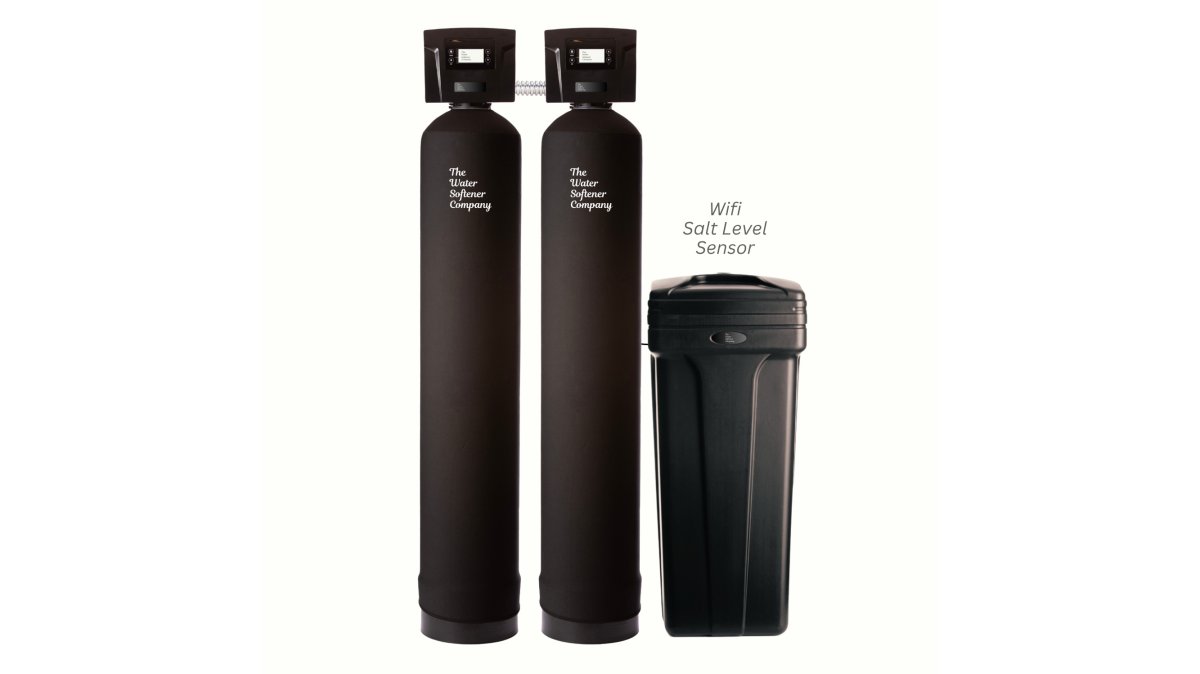
For maximum water quality, the Lifeguard Filter & Softener combines two tanks, one for filtration, one for softening, delivering 3X more capacity than single-tank alternatives.

At $2,900, this professional-grade whole-house water filter for hard water removes sediment, rust, chlorine, chloramines, PFAS, organics, VOCs, lead, mercury, chromium, copper, pesticides, herbicides, and pharmaceuticals; the softening stage then removes hardness minerals and prevents scale.
The filter tank uses Earths Finest Purifiers, Premium Coconut Activated Carbon, Premium Coconut Catalytic Carbon, and KDF Process Media, with a 10-12 year lifespan.
Salt-Free Water Conditioner for Hard Water: Sentry Plus Alternative
Not every household wants a salt-based softener. Some want to avoid salt purchases, brine discharge, and the space a brine tank takes up. A salt-free conditioner is the usual alternative, but understand what it does and doesn't do.
What salt-free conditioning actually does
A salt-free conditioner doesn't remove calcium and magnesium. It changes how they behave so they're less likely to precipitate as scale.
That's the key trade-off. Ion exchange removes the minerals and gives genuinely soft water; salt-free conditioning leaves them in place and only addresses scale. If you want soft-feeling water, better lather, or maximum tankless heater protection, salt-free won't deliver.
Measured scale control versus softening claims
Be careful with performance claims. Salt-free devices aren't covered by NSF/ANSI 44, the standard for cation exchange softeners, so they can't be certified as water softeners.
The Sentry Plus Conditioner's filtration stages target bad tastes & odors, sediment, rust, sand, particles, lead, mercury, chromium, copper, PFAS, VOCS, pesticides, and pharmaceuticals, and it's described as reducing 97% Chlorine, Chloramines. Verify those filtration claims against the product's certification listings, separate from any scale-control claim.
Salt-based versus salt-free: a practical comparison
| Factor | Salt-based softener | Salt-free conditioner |
|---|---|---|
| Hardness minerals | Removed | Remain in water |
| Scale on fixtures | Eliminated | Reduced, not eliminated |
| Soap lather and soft feel | Yes | No |
| Salt and brine discharge | Yes | None |
| Regeneration cycle | Yes | None |
| Maintenance | Salt refills, periodic service | Filter or media changes |
| Wastewater | Regeneration discharge | Backwash or filter change only |
| Best fit | Confirmed hard water, appliance protection | Scale control with low maintenance |
Choosing by hardness level and household size
Use your hardness test result. Below about 3.5 gpg, scale is minor and a salt-free conditioner or filtration alone may suffice. Between 3.5 and 7 gpg, salt-free conditioning can manage visible scale if you accept hard water; salt-based softening is stronger for appliance protection. Above 7 gpg, or wherever scale is visible, salt-based softening is the proven solution. Size any salt-free unit to your peak flow in gallons per minute so it doesn't restrict pressure.
Who should choose salt-free
Salt-free conditioning fits households wanting scale reduction without salt purchases, brine discharge, or heavy maintenance, and those who prefer mineralized water or worry about sodium. It doesn't fit households wanting genuinely soft water or maximum appliance protection.
Aquasana vs. Water Softener: Key Differences and When Each Works
Aquasana is best known for point-of-use drinking-water filters, under-sink systems, and whole-house filtration. A water softener is a point-of-entry device whose primary job is removing hardness minerals from all water entering the home. Confusing those jobs is the most common reason homeowners buy the wrong product for hard water.
The table below frames the comparison by criteria that actually determine whether a system solves a hard-water problem:
| Criterion | Aquasana-style filtration | Salt-based softener | Salt-free conditioner |
|---|---|---|---|
| Removes calcium and magnesium | No | Yes (ion exchange) | No (conditions scale) |
| Reduces scale on fixtures and appliances | Limited or none | Yes | Reduces buildup without removing minerals |
| Treats water at every tap | Only if whole-house model | Yes | Yes |
| Requires salt | No | Yes | No |
| Produces brine discharge | No | Yes, during regeneration | No |
| Typical maintenance | Filter changes | Salt refills, periodic service | Filter or media changes |
| Best fit | Drinking-water taste and contaminant reduction | Confirmed hard water, appliance protection | Scale control with low maintenance |
What each system actually does to hardness
A salt-based softener uses ion exchange resin to swap calcium and magnesium for sodium, so soft water lathers more easily and leaves fewer deposits. A salt-free conditioner changes how minerals behave so they cling less.
That matters because hard water symptoms, spotted glassware, white scale on showerheads, stiff laundry, shortened water-heater life, are caused by the minerals themselves. Filtration alone won't fix them.
How to verify performance claims
Check performance claims against independent certification and product-specific test data. For hardness reduction, look for NSF/ANSI 44 certification. For salt-free scale-control devices, look for NSF/ANSI 42 and ask for third-party scale-reduction data. For contaminant reduction, look for NSF/ANSI 42, 53, or 401 certifications naming the specific contaminant and reduction percentage.
Choosing by hardness level and household demand
Hardness is reported in grains per gallon (gpg) or mg/L of calcium carbonate: soft below 1 gpg, moderately hard at 3.5-7 gpg, hard at 7-10.5 gpg, very hard above 10.5 gpg. Most municipal supplies run 5-15 gpg; private wells can be much higher.
Use those numbers to narrow the choice:
- Under about 3.5 gpg: filtration for taste and contaminants may be enough; softening is usually optional.
- About 3.5 to 7 gpg: a salt-based softener is the most reliable way to protect appliances and eliminate scale; a salt-free conditioner is a reasonable low-maintenance compromise if you dislike soft water feel.
- Above 7 gpg, or any confirmed scale on fixtures: salt-based softening is the proven choice, and salt-free conditioning should be treated as scale control, not softening.
When each approach makes sense
Choose an Aquasana-style filter if your water isn't particularly hard and you prioritize drinking-water taste, chlorine, or specific contaminants. Choose a salt-based softener for confirmed hard water and the strongest appliance protection. Choose a salt-free conditioner for scale reduction with no salt, no brine discharge, and minimal maintenance. Many households combine a whole-house softener or conditioner with a point-of-use drinking-water filter, the only way to get both soft water and refined drinking-water quality.
Lifeguard Well Water Filter & Softener: For Well Water Hard Water Challenges
Well water brings different challenges.
Tank 2 is a high-efficiency softener with built-in 4-stage self-cleaning filtration, removing hardness minerals, micro-fine iron, tastes, odors, chemicals, and organics.
Installation is plug & play: From Well - Step 1: Iron Filter - Step 2: Softener. Iron filter media lasts 10-12 Years.
Hard water doesn't have to mean constant limescale battles or appliance failure.
Frequently Asked Questions
Does Aquasana soften hard water?
Aquasana systems primarily filter contaminants like chlorine and sediment but do not soften hard water. They use filtration, not ion exchange, so they cannot remove hardness minerals like calcium and magnesium. For true hard water softening, you need a salt-based water softener or salt-free conditioner that specifically targets hardness minerals. If scale buildup on fixtures is your main concern, a dedicated softener is more effective than filtration alone.
What is the difference between a water softener and a whole-house water filter?
A water softener removes hardness minerals (calcium and magnesium) through ion exchange, preventing scale buildup and improving soap effectiveness. A whole-house water filter removes sediment, chlorine, taste, and odor but does not address hardness. Many homeowners with hard water need both: a softener handles mineral buildup, while a filter improves taste and removes other contaminants. Some systems, like the Lifeguard Filter & Softener, combine both functions in one unit.
What water filtration system is best for hard water?
The best system depends on your water source and priorities. For city water with hard water, the Lifeguard Filter & Softener ($2,900) combines softening with multi-stage filtration to handle both hardness and contaminants. For well water, the Lifeguard Well Water Filter & Softener ($3,500) adds iron and manganese removal. If you prefer salt-free treatment, the Sentry Plus ($2,100) reduces scale without salt but does not fully soften. Test your water hardness first to determine the right choice.
Can a whole-house filter remove hard water minerals?
Standard whole-house filters cannot remove hardness minerals. Filters trap sediment and absorb chlorine but cannot eliminate dissolved minerals like calcium and magnesium. Only softeners using ion exchange or salt-free conditioners using template-assisted crystallization can reduce hardness. If your filter is not paired with a softener, you will still see scale buildup on fixtures. Combination systems like the Lifeguard line address both filtration and hardness removal.
What should I compare when choosing an Aquasana alternative for hard water?
Compare these key factors: (1) Hardness removal method, salt-based softening, salt-free conditioning, or filtration only; (2) Total contaminant reduction, chlorine, sediment, iron, and other impurities; (3) Flow rate and household size compatibility; (4) Salt and water usage if salt-based; (5) Total cost including purchase, installation, maintenance, and replacement filters; (6) Warranty and support. For hard water specifically, prioritize systems that reduce hardness minerals, not just filtration-only options.