

Does Water Softening Improve Water Pressure?
Last Updated: October 23, 2026
Quick Summary
No, water softening does not improve water pressure, and it is not designed to. Softening removes calcium and magnesium from hard water, but it does not add force to your water supply or open up a pinched pipe. A correctly sized softener should cause only a small pressure drop, often just a few psi at normal household flow.
- Water pressure is force measured in psi, while flow rate is volume measured in gallons per minute.
- A softener can cause low pressure through a clogged pre-filter, fouled resin, undersized capacity, or installation errors.
- Measure static pressure at an outdoor hose bib, then measure pressure after the softener at a fixture inside.
- Replace the pre-filter every 3-6 months and check salt level monthly to keep flow open.
- Call a plumber when pressure is low at the meter or main valve, not at the softener.
Table of Contents
- Does Water Softening Improve Water Pressure? The Short Answer
- How Water Softeners Affect Pressure and Flow
- Can a Water Softener Cause Low Water Pressure?
- Clogged Water Softener Symptoms to Watch For
- Hard Water, Mineral Scale, and Plumbing Restrictions
- How to Increase Water Pressure in a House: Step-by-Step Diagnosis
- Preventing Pressure Problems: Maintenance and Sizing
- When to Call a Plumber (and When to Stop DIY Troubleshooting)
- Frequently Asked Questions
Does Water Softening Improve Water Pressure? The Short Answer
No. Water softening does not improve water pressure, and it is not designed to. Softening removes calcium and magnesium from hard water, but it does not add force to your water supply or open up a pinched pipe. This guide from The Water Softener Company explains what softening actually does, why pressure problems show up after installation, and how to diagnose the real cause.
The University of Minnesota Water Resources Center notes that residential softeners should be designed to treat water without significant pressure loss. That is the goal: no loss. Not a gain.
Here is the confusion in one line. Softening fixes scale buildup, which can slowly choke flow over years. Pressure is a different measurement. Fixing scale can restore flow you already lost. It cannot create pressure that was never there.
Below, we walk through the difference between pressure and flow, the pressure drop a correctly sized softener should cause, and a step-by-step diagnosis you can run this weekend.
Pressure vs. Flow Rate: What's the Difference?
Water pressure is the force pushing water through your pipes, measured in pounds per square inch (psi). Flow rate is how much water moves in a given time, measured in gallons per minute (gpm).
Think of a garden hose. Pressure is how hard the water shoots out. Flow rate is how many gallons fill a bucket in a minute. You can have high pressure and low flow if a nozzle is pinched. You can have low pressure and decent flow if the supply itself is weak.
This matters because homeowners often blame the softener for "low pressure" when the real issue is restricted flow. A clogged filter or fouled resin bed cuts flow. It rarely changes the static pressure reading on a gauge.
How Water Softeners Affect Pressure and Flow
A softener sits in the main line, so water passes through a resin tank before reaching your fixtures. Any device in that line adds some resistance. The question is how much.
Water flows through a bed of resin beads. When the softener is sized right and the resin is clean, that path stays open. Pressure loss stays small. When the unit is too small for the household demand, the water has to push through faster than the tank can handle, and pressure at the tap drops.
The bypass valve and connectors matter too. A half-open bypass, a kinked flex line, or undersized plumbing at the connections can throttle the whole system.
Expected Pressure Drop Across a Correctly Sized Softener
A correctly sized, well-maintained softener should cause only a small pressure drop, often just a few psi at normal household flow. You should not feel it in the shower.
The practical test is simple. Measure pressure at an outdoor hose bib before the softener and at a fixture after it. A small gap is normal. A large gap points to a restriction inside the softener, not to softening itself.
Can a Water Softener Cause Low Water Pressure?
Yes, a softener can cause low water pressure, but usually because of a specific fault, not because softening is inherently a pressure-killer. The unit becomes the suspect when pressure was fine before installation and dropped after.
The most common culprits are a clogged pre-filter, fouled or old resin, an undersized unit, and installation mistakes. Each one restricts flow somewhere in the path.
If pressure was already weak before the softener went in, the softener is not the cause. It just made an existing problem more noticeable.
Common Causes of Pressure Loss After Installation
- Clogged sediment filter: A loaded pre-filter starves the softener of flow. Change it on schedule.
- Fouled resin bed: Iron, sediment, or biofilm coats the beads and blocks water.
- Old or damaged resin: Beads break down over time and pack tight, raising resistance.
- Undersized capacity: A unit rated below your household's peak demand cannot keep up.
- Installation errors: A partly closed bypass valve, reversed inlet and outlet, or undersized connectors all throttle flow.
- Clogged drain line: A blocked drain slows backwash, so the resin never fully cleans.
Clogged Water Softener Symptoms to Watch For
A clogged softener announces itself in a few predictable ways. Catch these early and you avoid most pressure complaints.
- Water feels hard again, with spots on glass and soap that will not lather
- Pressure drops at showers and faucets, especially during heavy use
- The softener runs long backwash cycles or seems to regenerate constantly
- Water looks cloudy or carries a metallic or sulfur smell
- Salt bridges form in the brine tank, leaving a crust with a hollow space beneath
If you spot two or more of these, inspect the resin bed and the pre-filter before blaming the plumbing.
Hard Water, Mineral Scale, and Plumbing Restrictions
Hard water leaves calcium and magnesium deposits inside pipes, water heaters, and fixtures (Hardness of Water). Over years, that scale narrows the pipe and cuts flow. This is where softening earns its keep.
Softening removes the minerals before they can deposit. No scale forms, so pipes and appliances stay clear. That protects long-term flow and extends the life of your water heater and fixtures.
But this is prevention, not a pressure boost. If scale has already narrowed your pipes, softening stops it from getting worse. It will not dissolve the existing crust. That may need a flush or a plumber.
How to Increase Water Pressure in a House: Step-by-Step Diagnosis
Work through these steps in order. Each one narrows the cause before you spend money on parts or a plumber.
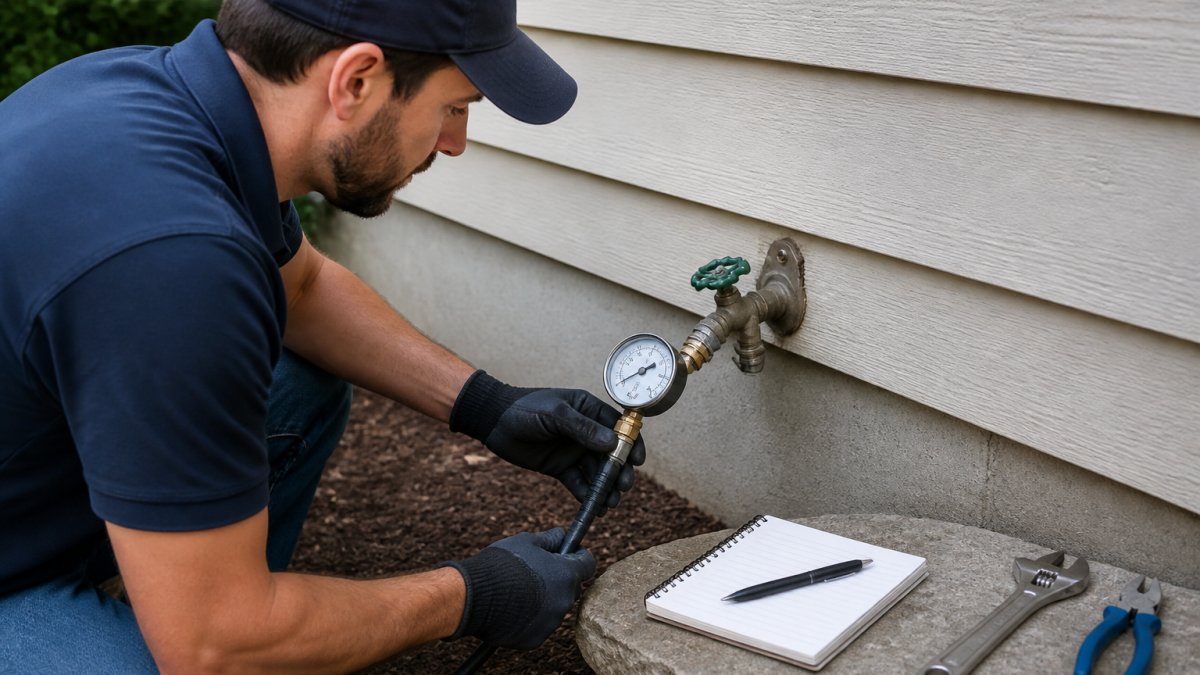
- Measure static pressure at an outdoor hose bib with a screw-on gauge. Note the reading.
- Measure pressure after the softener at a fixture inside the house.
- Open two taps and watch both gauges. A big drop on the downstream gauge points to a restriction.
- Check the bypass valve to confirm it is fully open.
- Inspect and replace the pre-filter if it looks loaded.
- Test the resin by checking for hardness at the tap with test strips.
- Confirm sizing against your bathroom count and peak demand.
- Call a plumber if pressure is low at the meter or the main valve.
| Step | What You Check | Normal Result | Problem Sign |
|---|---|---|---|
| 1 | Static pressure at hose bib | Steady reading | Very low at source |
| 2 | Pressure after softener | Close to step 1 | Large gap |
| 3 | Two-tap flow test | Small drop | Sharp collapse |
| 4 | Bypass valve | Fully open | Partly closed |
| 5 | Pre-filter | Clean | Loaded or clogged |
| 6 | Resin and hardness | Soft water | Hard water returns |
Well Water vs. Municipal Systems
Well systems bring extra suspects. A failing well pump, a waterlogged pressure tank, or a clogged sediment filter ahead of the softener can all tank your pressure. Check the pressure tank reading first.

Municipal systems are different. If your neighbors have strong pressure and you do not, the problem sits inside your home: the softener, the filter, or your own plumbing. If the whole street is weak, call the water utility.
Preventing Pressure Problems: Maintenance and Sizing
Sizing is the first defense. Match the unit to your household. The Water Softener Company's Soft Water System comes in three models: Model 1000 for 1-4 bathrooms at 12 gpm, Model 2000 for 4-6 bathrooms at 18 gpm, and Model 3000 for 6-8 bathrooms at 22 gpm. Pick the model that covers your peak demand and you avoid the throttling that comes with an undersized tank.
Maintenance is the second. A simple schedule keeps flow open:
- Replace the pre-filter every 3-6 months
- Check salt level monthly and break up any bridges
- Test hardness quarterly with strips
- Inspect resin every few years for breakdown
- Clean the brine tank annually
Our systems are built to be low maintenance: just add salt. The automatic controls adjust regeneration to actual usage and refresh during periods of non-use, which keeps the resin working without constant attention.
When to Call a Plumber (and When to Stop DIY Troubleshooting)
Call a plumber when pressure is low at the meter or main valve, when you smell gas near the water heater, or when a repair means cutting into the main line. Those are not softener problems, and DIY work there risks damage or injury.
Stop your own troubleshooting if you cannot isolate the cause after the steps above, if you see water pooling around the softener, or if the resin has escaped into your plumbing. Resin in the lines needs a professional flush.
For everything else, a softener that is sized right and maintained well should never be the reason your shower feels weak. If it is, the fix is usually a filter, a resin check, or a valve position, not a new system.
Weak pressure is frustrating, but it is rarely a mystery once you measure it. If you are ready to rule out hard water as the cause and protect your plumbing for the long run, The Water Softener Company builds high-efficiency systems for city and well water, made in the USA with free shipping to the contiguous 48 states. Our Soft Water System uses up to 60% less salt and water than older units, and every system ships with a hardness tester so you can set it correctly from day one.
Frequently Asked Questions
Does a water softener reduce water pressure?
A correctly sized and maintained water softener should not noticeably reduce pressure. The University of Minnesota Water Resources Center advises designing residential softeners to treat water without significant pressure loss. In practice, most pressure complaints trace back to an undersized unit, a clogged sediment filter, fouled resin, or restrictive plumbing connections rather than softening itself. If you notice a drop after installation, check the bypass valve position and filter first.
Can a clogged water softener cause low water pressure?
Yes. A clogged resin bed or a fouled sediment pre-filter restricts flow through the softener, which shows up as lower pressure at fixtures. Common clogged water softener symptoms include a noticeable drop in shower pressure, cloudy or hard water returning, and the softener running through salt faster than usual. Backwashing and cleaning the filter often restores flow. If the resin is old and compacted, replacement may be needed.
How do I know if my water softener is restricting water flow?
Measure pressure at a hose bib before and after the softener using a pressure gauge. A drop of more than 10-15 psi across the unit suggests restriction. Also check the service flow rate on your model against your household demand; a 1-4 bathroom home typically needs at least 12 gpm. If pressure returns when you switch the bypass valve, the softener is the likely cause.
Can hard water cause low water pressure?
Hard water itself does not directly lower pressure, but the scale it leaves behind narrows pipes, clogs aerators, and coats fixtures over time, which reduces flow. Softening removes the calcium and magnesium that form scale, helping protect plumbing and appliances. If scale buildup is already severe, softening prevents further deposits but may not reverse existing restrictions, so a plumbing flush or fixture cleaning may be needed.
