

How to Choose Water Softener Size for Your Home
Quick Summary
The right water softener size depends on your daily hardness load, which is your household's daily water use in gallons multiplied by your water hardness in grains per gallon. Multiply that load by 3 to 7 days to get the grain capacity you need, then choose a unit whose usable capacity meets it.
- Convert hardness from PPM to grains per gallon by dividing PPM by 17.1.
- Plan for about 60 to 80 gallons of water per person per day.
- Size against usable capacity, not the advertised grain rating on the box.
- Add iron to the hardness load, since iron consumes resin capacity too.
- Check the unit's flow rate against your peak demand, not your daily average.
Table of Contents
- Why Water Softener Size Matters for Your Home
- Measure Your Water Hardness and Water Source
- Estimate Your Daily Water Use and Hardness Load
- Use the Water Softener Grain Capacity Formula
- Read a Water Softener Sizing Chart by Household Size
- What Size Water Softener for a Family of 4
- Pick Your Softener Size and Check Flow Rate Before You Buy
- Frequently Asked Questions
Why Water Softener Size Matters for Your Home
Last Updated: November 14, 2026
Choosing the right water softener size is the single biggest factor in whether your system protects your plumbing and appliances or wears out early. Homeowners who buy too small can run out of soft water by evening, and homeowners who buy too big can waste salt and water every day.
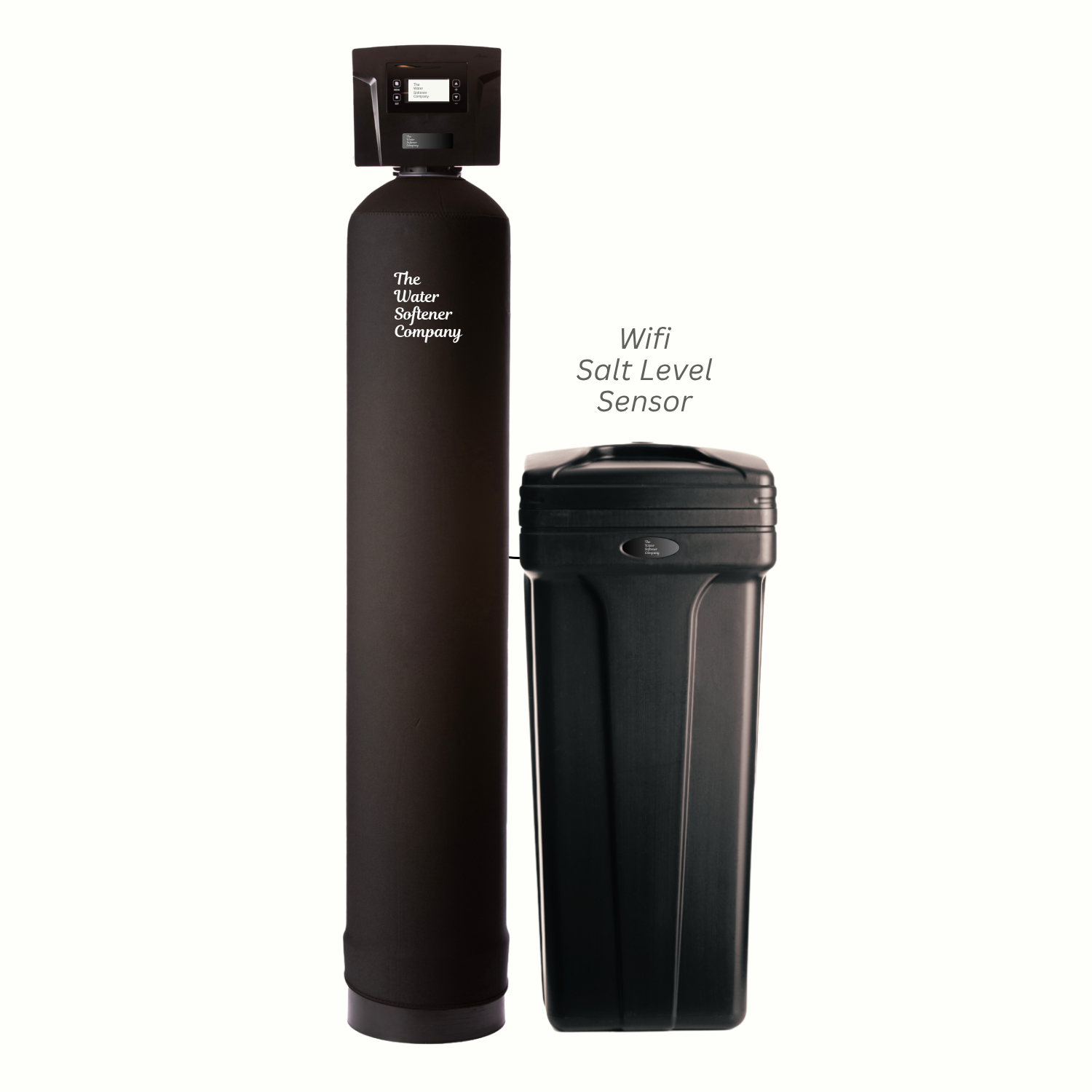
An undersized softener works hard all day and regenerates often. Each regeneration uses water and salt, so a small unit can raise your bills while still letting hard water through during peak use. An oversized unit can also cause problems.
The goal is a unit that matches your actual hardness load, which is the amount of hardness your household sends through the system each day.
Measure Your Water Hardness and Water Source
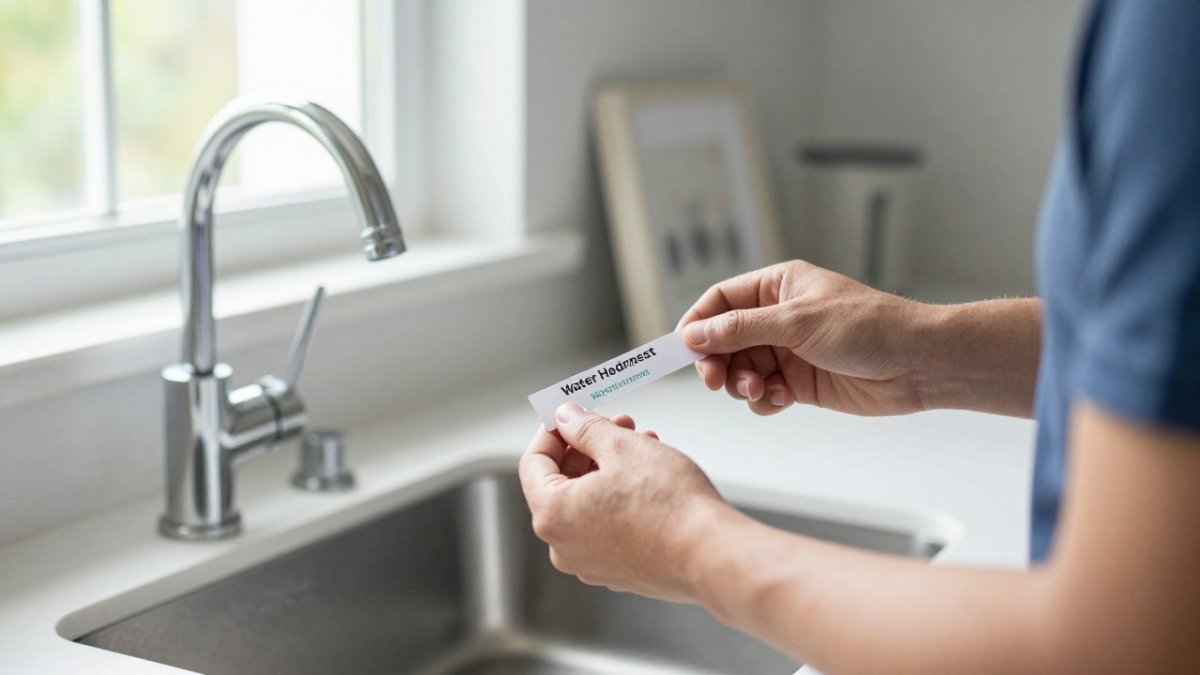
Start by finding out how hard your water is, since every sizing calculation depends on this number. Hardness is usually reported in grains per gallon (GPG) or parts per million (PPM).
Check where your water comes from first. Municipal water is typically tested and reported by your utility, often in an annual water quality report that you can request or find online (the EPA). Well water varies far more from property to property, so a test from a certified lab is the most reliable choice.
If you have a private well, also test for iron, since iron adds to the hardness load and affects how you size the system. A water softener needs accurate numbers to size correctly, so testing is worth the small cost.
Estimate Your Daily Water Use and Hardness Load
Your hardness load is the total hardness your home uses each day, measured in grains. Use this formula:
Daily hardness load (grains) = Household water use per day (gallons) × Water hardness (GPG)
To estimate household water use, a common planning figure is about 60 to 80 gallons per person per day, though your actual usage depends on habits and fixtures.
For example, a household of four using 70 gallons per person per day uses 280 gallons daily. If your water measures 10 GPG, the daily hardness load is 2,800 grains.
Remember that iron also counts toward the load.
The hardness load is the total hardness your home uses each day, and it depends on water use and hardness level.
| Input | Value used in example | Note |
|---|---|---|
| Water use per person per day | 60 to 80 gallons | Common planning figure |
| Household of four at 70 gal/person | 280 gallons per day | Example total |
| Water hardness | 10 GPG | Example hardness level |
| Daily hardness load | 2,800 grains | Gallons × GPG |
Use the Water Softener Grain Capacity Formula
Once you know your daily hardness load, the next step is choosing a unit whose capacity covers it between regenerations.
Required grain capacity = Daily hardness load × Days between regenerations
Using the example above, a daily load of 2,800 grains with a 5-day target gives 14,000 grains. A unit rated at 32,000 grains would regenerate roughly every 11 days, which is comfortable.
Advertised, nominal, and usable capacity are not the same number
The grain rating on the box is almost always the maximum capacity at the highest salt dose, and that is not the number you should size against. It helps to think about capacity in three layers:
- Advertised (rated) capacity is the headline number, such as 32,000 or 48,000 grains. It is measured at a high salt dose, often 15 pounds of salt per cubic foot of resin, and it is the least efficient way to run the unit.
- Nominal capacity is the capacity at a more typical salt dose, often 8 to 10 pounds per cubic foot. It is usually 10 to 20 percent lower than the advertised figure.
- Usable capacity is what you can actually count on between regenerations after accounting for reserve capacity, resin age, water temperature, and the fact that the unit must keep some capacity in reserve so you do not run hard during a busy day.
A practical planning approach is to size with some margin below the advertised rating, since a unit sized exactly to its headline number may regenerate more often than planned.
A worked example that includes iron
Suppose a household of four uses 70 gallons per person per day, or 280 gallons daily. The water test shows 12 GPG of hardness and 1.5 PPM of ferrous (clear-water) iron. Iron is not hardness, but it consumes resin capacity, so it has to be converted. A common conversion is about 4 GPG of hardness equivalent for every 1 PPM of ferrous iron, though your test report or softener manufacturer may specify a different factor.
- Hardness load: 280 gallons × 12 GPG = 3,360 grains per day
- Iron load: 1.5 PPM × 4 = 6 GPG equivalent; 280 gallons × 6 GPG = 1,680 grains per day
- Total daily load: 3,360 + 1,680 = 5,040 grains per day
At a 5-day regeneration target, the required capacity is 5,040 × 5 = 25,200 grains. Because you should size against usable rather than advertised capacity, you would look for a unit advertised at roughly 32,000 to 34,000 grains, not a 25,000-grain unit. This is the step most sizing charts skip, and it is the step that keeps a system from regenerating every other day.
Watch out: if your iron is higher than about 2 to 3 PPM, or if the iron is bacterial or colloidal rather than clear-water ferrous, a standard softener may foul and a dedicated iron filter ahead of the softener is usually the better design. Test for iron before you commit to a grain rating. Because iron levels can affect both equipment choice and placement, the water softener installation guide can help connect your test results to a sound system layout.
Build in a margin, then check the regeneration interval
After you have a candidate capacity, divide usable capacity by your daily load to see how often the unit will regenerate. A unit with 26,000 usable grains and a 5,040-grain daily load regenerates about every 5 days, which is a healthy interval. If the math puts you at 1 to 2 days, the unit is too small for the load regardless of what the chart says.
Read a Water Softener Sizing Chart by Household Size
If you prefer a quick check, a sizing chart pairs household size with typical hardness levels. These charts are useful for a first estimate, but they assume average water use.
Charts also help you spot a mismatch. If your calculated grain requirement is far above the chart recommendation for your household size, you likely have high hardness, high water use, or both, and should look closer at your numbers before buying.
What Size Water Softener for a Family of 4
A family of four is one of the most common sizing questions we hear. At 70 gallons per person per day, that is 280 gallons daily.
If your hardness is higher, say 20 GPG, the daily load doubles to about 5,600 grains, and a 5-day target calls for about 28,000 grains. In that case, a larger capacity unit is the safer choice.
Pick Your Softener Size and Check Flow Rate Before You Buy
Grain capacity alone does not guarantee good performance. Capacity answers "how much hardness can this unit remove between regenerations?" Flow rate answers a different question: "how much water can this unit soften at once, at the moment my household demands it?" A unit can have plenty of capacity and still restrict flow during simultaneous use, such as running the shower while the dishwasher and washing machine are on.
Calculate your peak demand in gallons per minute
Peak demand is not your daily average. It is the sum of the fixtures that can run at the same time. A common method is to add the flow of the fixtures you expect to run simultaneously, using typical fixture rates:
- Shower: about 2.0 to 2.5 GPM per showerhead
- Bathroom faucet: about 1.0 to 1.5 GPM
- Kitchen faucet: about 1.5 to 2.2 GPM
A realistic peak for a family of four is a shower (2.5 GPM) plus a bathroom faucet (1.5 GPM) plus the washing machine (2.5 GPM), or about 6.5 GPM. Add an outdoor hose bib and the same household can briefly demand 12 to 16 GPM. That is why a unit rated for the grain load can still feel weak on a summer morning.
Match the flow rating to the peak, not the average
Compare your calculated peak demand against the unit's service flow rating, which is the maximum gallons per minute the unit can deliver while still softening.
A useful rule is to pick a unit whose service flow rating is at least equal to your peak demand, and ideally 20 to 30 percent above it.
Watch out: a high flow rating does not rescue a unit that is too small on grain capacity, and a large grain capacity does not rescue a unit with a low flow rating.
Pressure drop and well-water considerations
Flow ratings are usually published at a specific pressure drop, often 15 PSI at the rated flow. If your home has marginal water pressure, a unit with a high flow rating can still leave you with weak showers because the softener adds resistance.
If you are on a private well, also check whether your water pressure and filtration needs call for a combined system. The Lifeguard Well Water Filter & Softener is built for well sources with iron and other contaminants in addition to hardness. Homeowners on municipal supply who also want filtration may find the Lifeguard Filter & Softener a better fit. For a budget-conscious setup focused mainly on softening, the Carbon Softener System is a practical choice.
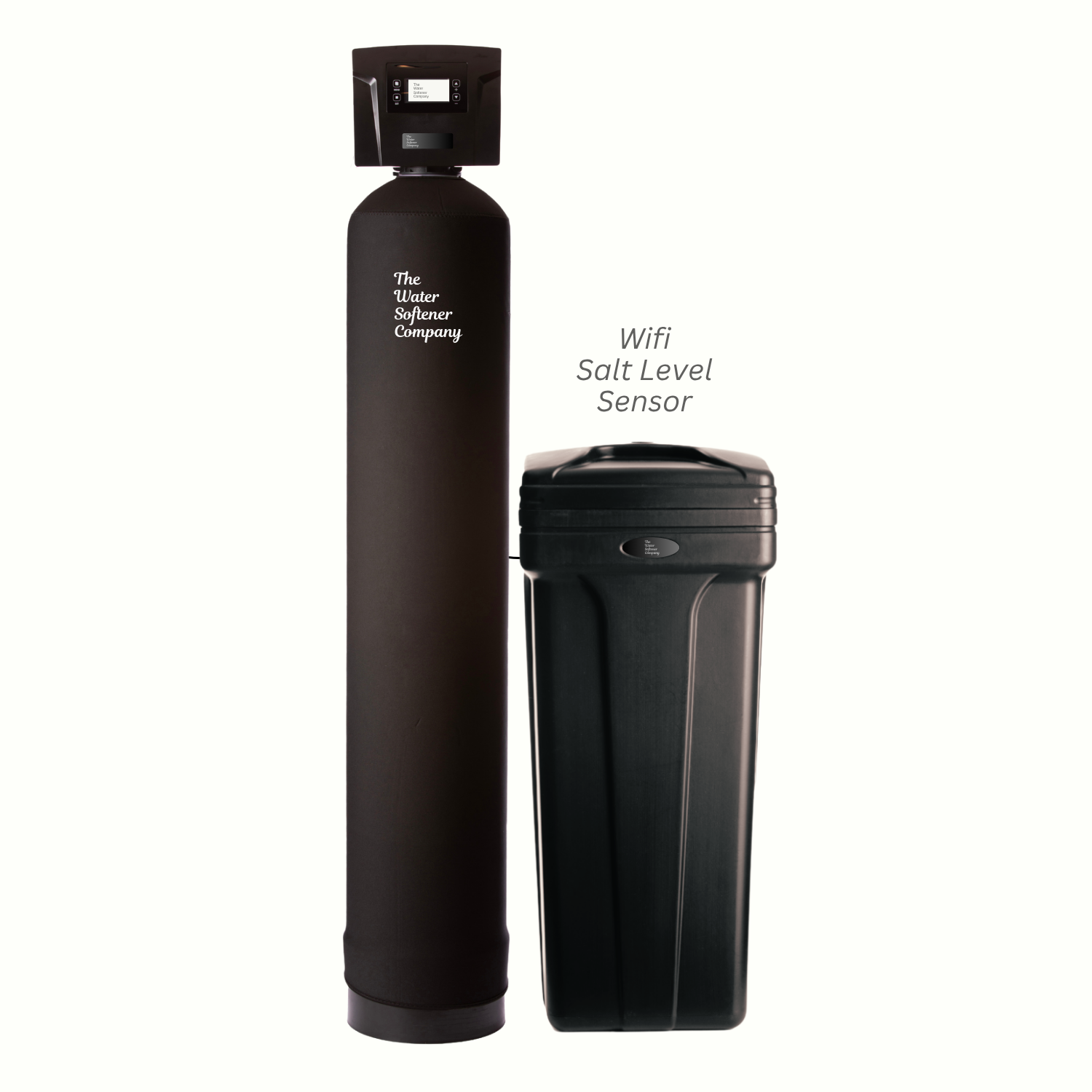
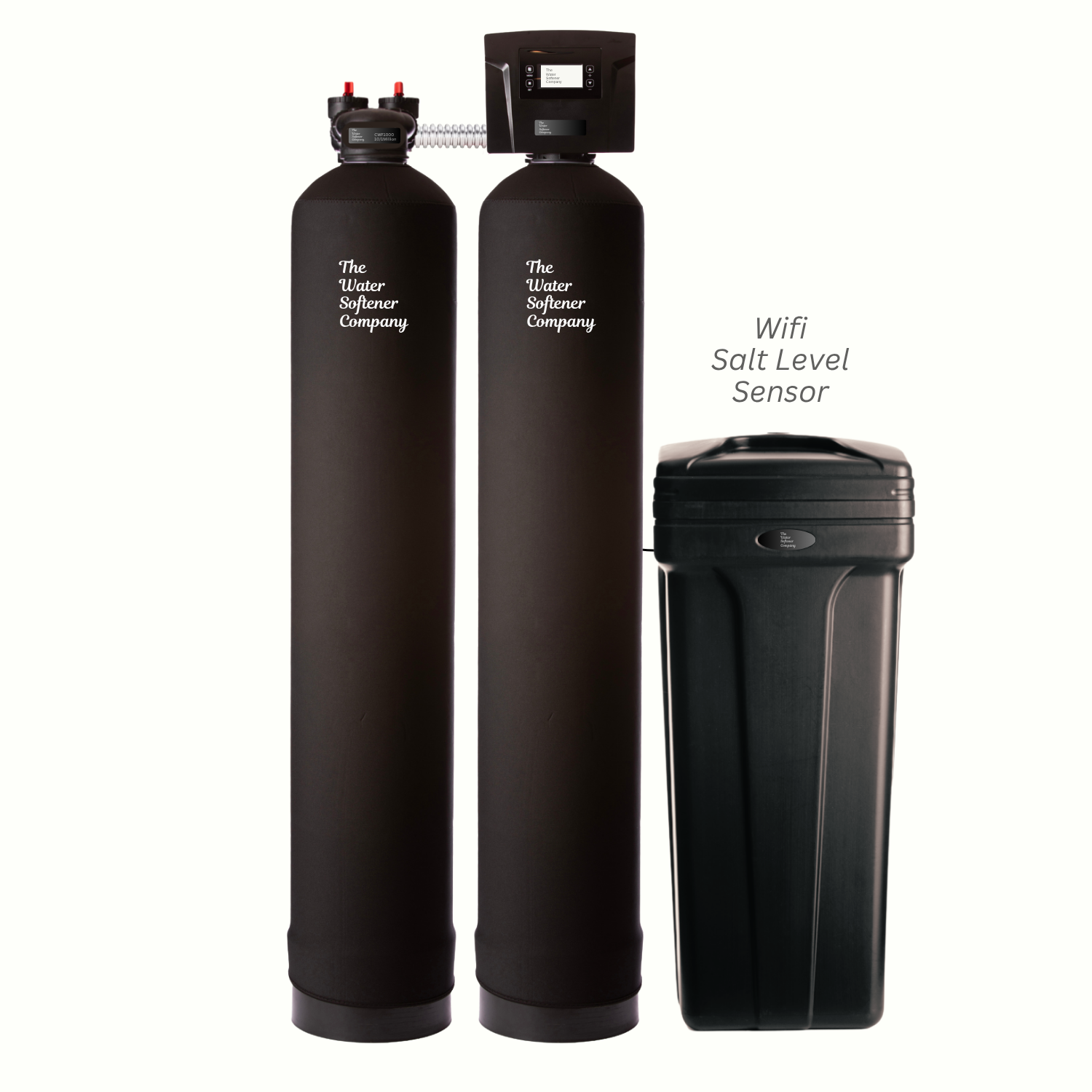
Once installed, verify your sizing by tracking how often the unit regenerates and whether soft water lasts through your busiest days.
Frequently Asked Questions
How do I figure out what size water softener I need?
Start with your household's daily water use, which is commonly estimated at about 75 gallons per person per day, then multiply by your water hardness in grains per gallon to get your daily hardness load. Multiply that by the number of days between regenerations you want, and choose a softener whose usable grain capacity meets or exceeds that figure. Check the service flow rate against your peak household demand, such as running a shower while the dishwasher runs. Your water test results and household size together give you the starting point for an accurate water softener size.
Is it better to oversize a water softener?
Oversizing is not automatically better. A softener that is much larger than needed regenerates less often, which can let resin lose capacity and let water quality drift, and it uses more salt per gallon treated over time. Undersizing causes the opposite problem: hard water breaks through before regeneration and the system runs out of soft water during heavy use. Aim for a unit whose usable capacity covers your daily hardness load with reasonable headroom, rather than the largest model you can afford.
How many people is a 40,000 grain water softener good for?
A 40,000 grain water softener depends on water hardness and daily use rather than headcount alone. At 75 gallons per person per day and 10 grains per gallon of hardness, one person produces about 750 grains of hardness per day, so 40,000 grains could cover roughly 50 days for one person, or around 13 days for four people at that hardness level. Harder water or higher water use shortens that window. Use your own hardness test and usage estimate to confirm the fit.
How do water hardness and daily water use affect softener size?
Hardness and daily use multiply together to set the workload. Water with 15 grains per gallon of hardness requires twice the grain capacity of water at 7.5 grains per gallon for the same household. Likewise, a family using 300 gallons per day creates far more hardness load than a couple using 150. Measuring both before you shop lets you calculate a realistic daily hardness load and avoid buying a unit that regenerates constantly or runs dry.
