

How to Remove Soap Scum From Shower Surfaces
Last Updated: November 17, 2026
Quick Summary
To remove soap scum from a shower, spray a 50/50 mix of white vinegar and warm water onto the surface, let it sit for 10 to 15 minutes, then scrub with a nylon brush and rinse. Stubborn spots respond well to a baking soda and dish soap paste, followed by a vinegar rinse.
- Soap scum forms when soap reacts with minerals in hard water, trapping oils and dirt.
- Mix equal parts white vinegar and warm water in a spray bottle for routine cleaning.
- Let the vinegar mix sit for 10 to 15 minutes before scrubbing.
- Do not let vinegar sit for hours, since long contact can etch grout and dull finishes.
- Squeegee glass doors after each shower to stop the film from forming.
Table of Contents
- What Soap Scum Is and Why It Builds Up
- Tools and Cleaners You Need Before You Start
- How to Remove Soap Scum From Shower With Vinegar
- How to Remove Soap Scum From Shower With Baking Soda
- How to Clean Years of Soap Scum Buildup
- Removing Soap Scum From Glass Shower Doors
- Keeping Soap Scum Off Your Shower After Cleaning
- Frequently Asked Questions
What Soap Scum Is and Why It Builds Up
Soap scum is a sticky film made when the fatty acids in soap react with the minerals in hard water (Why does it take so long to rinse the soap off my hands? What are hard water and soft...). Calcium and magnesium bind to the soap and form a stubborn white or gray residue that clings to tile, glass and grout. Over time, this film traps body oils, dead skin and dirt, which is why the buildup gets thicker the longer it sits.
Hard water makes the problem worse. Hard water is a common reason shower surfaces look chalky. If you see that white, crusty mineral residue on showerheads and fixtures, our guide on how to remove limescale from showerheads walks through the cleanup. If you wipe the shower and it looks dull again within a few days, mineral content in the water may be the reason.
Common causes of buildup:
- Hard water minerals that bind to soap
- Body oils, shampoo and conditioner residue
- Poor ventilation that lets moisture stay on surfaces
- Infrequent cleaning, especially on glass doors and corners
Knowing what you are fighting makes the cleaning easier. The goal is to dissolve the film and then keep it from coming back.
Tools and Cleaners You Need Before You Start
Gather your supplies before you begin. You will need a few simple items, most of which you probably already have at home.
What to gather:
- White vinegar
- Dish soap
- Baking soda
- A spray bottle
- A nylon-bristle scrub brush or non-scratch sponge
- Microfiber cloths
- Rubber gloves
- A squeegee for glass doors
Match the cleaner to the surface before you spray anything. The same vinegar mix that rescues a glass door can permanently dull a marble bench or strip a factory coating off coated glass. Use this surface-by-surface check first, and test any cleaner on a hidden spot for a minute before you commit to the whole shower. Because surface-safe choices matter throughout routine upkeep, the same care helps when you clean a walk-in shower and keep its finishes intact.
- Glassy tile and ceramic tile: Vinegar and dish soap are safe on glazed ceramic and porcelain tile. Keep the mix off unglazed tile and off grout lines longer than about 10 to 15 minutes, because acid weakens cement-based grout over repeated exposure. Scrub grout with a nylon brush, not a wire brush.
- Glass shower doors and enclosures: Plain glass tolerates vinegar well. Coated or treated glass is the exception. Many newer doors carry a water-repellent factory coating, and repeated acid contact can break that coating down, which makes the glass sheet water again and scum faster. Check the manufacturer's care label; if it says no acidic cleaners, use dish soap and water instead.
- Acrylic and fiberglass surrounds: These are the most scratch-prone surfaces in the shower. Skip abrasive pads, steel wool and gritty powders, and use a non-scratch sponge with dish soap or a diluted vinegar mix. Rinse thoroughly, because residue left on acrylic can haze it.
- Natural stone such as marble, travertine and limestone: Do not use vinegar. These stones are calcium-based, and acid etches the surface, leaving dull spots that cannot be polished out with a household product. Use a pH-neutral stone cleaner or a dish soap solution, and dry the surface after cleaning.
- Metal fixtures, trim and frames: Chrome, brushed nickel and stainless steel handle vinegar briefly, but do not let it dwell. Rinse and dry the fixtures after cleaning to avoid water spots and pitting. Avoid acid on any fixture with a warning label against it.
Safety basics: Open a window or run the bathroom fan while you work, wear rubber gloves, and keep vinegar away from bleach and from any cleaner containing bleach. Mixing the two releases chlorine gas (the CDC). Never store a homemade vinegar mix in a bottle that once held bleach, and label your spray bottle so no one mistakes it for something else.
Once you know your surface, the recipes below will not damage it.
How to Remove Soap Scum From Shower With Vinegar
Vinegar is the most common way to break down soap scum. Its mild acid dissolves the mineral film without harsh chemicals. Many homeowners find it a good first step.
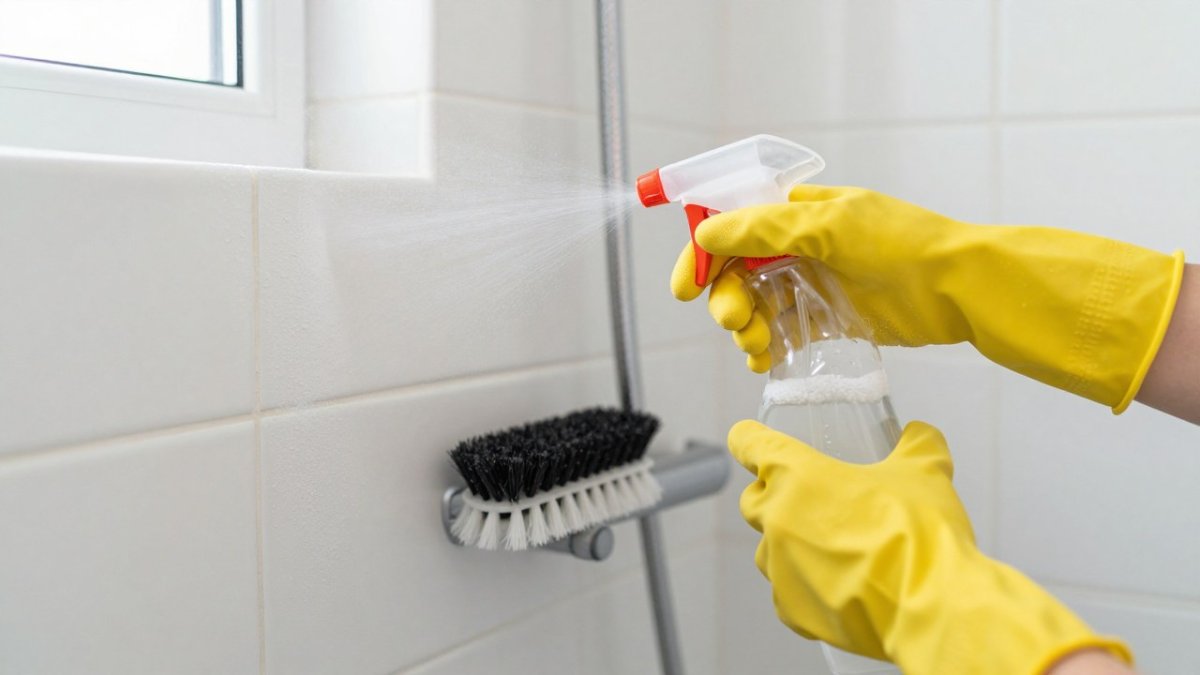
Steps:
- Mix equal parts white vinegar and warm water in a spray bottle. A 50/50 mix works well for most jobs.
- Wet the shower surface with warm water first. This helps the solution spread evenly.
- Spray the vinegar mix generously over the scummy areas.
- Let it sit for 10 to 15 minutes so the acid can break down the buildup.
- Scrub with a nylon brush or sponge in small circles.
- Rinse with clean water and wipe the surface dry with a microfiber cloth.
Watch out: Do not let vinegar sit for hours. Long contact can etch grout and dull some finishes.
The table below compares the main cleaning methods covered in this guide.
| Method | Best for | Key difference |
|---|---|---|
| White vinegar spray | Routine soap scum on glazed tile and glass | Mild acid dissolves the mineral film |
| Baking soda paste | Stubborn spots that need gentle scrubbing | Mild grit lifts residue without scratching most surfaces |
| Two-step vinegar and baking soda | Light to moderate buildup | Paste loosens residue, vinegar dissolves what remains |
| Vinegar with 20-30 minute dwell | Years of buildup | Longer contact loosens thick film in stages |
| Dedicated descaler | Hard crust that persists after two rounds | Targets mineral scale rather than soap film |
How to Remove Soap Scum From Shower With Baking Soda
Baking soda is a gentle scrubbing agent that works well on stubborn spots. Its mild grit lifts residue without scratching most surfaces.
Steps:
- Mix baking soda with a little dish soap until you get a thick paste.
- Apply the paste to the scummy areas with a sponge.
- Let it sit for about 5 minutes.
- Scrub gently, then rinse thoroughly.
- Wipe dry for a streak-free finish.
Baking soda also pairs well with vinegar. Use the paste first, then follow with the vinegar spray for a two-step clean.
How to Clean Years of Soap Scum Buildup
Heavy, long-term buildup needs more patience. Thick layers rarely come off in one pass, so plan on a longer session and work in stages rather than scrubbing harder.
First, identify what you are actually fighting. Soap scum is the soft, white-to-gray film that smears when you wipe it. Hard-water scale is the chalky, crusty ring around the drain, the faucet base and the bottom of the glass, and it feels gritty rather than slick. Most old showers have both, but they respond differently: vinegar and dish soap cut soap scum, while scale needs a longer acid dwell time or a dedicated descaler. If a spot stays rough after two vinegar passes, treat it as scale.
Stage 1: Loosen the top layer.
- Wet the surface with warm water.
- Spray the vinegar mix and let it sit for 20 to 30 minutes. Re-spray any area that starts to dry so the acid stays active.
- Scrub the thickest spots with a stiff nylon brush, working in small sections.
- Rinse and assess before repeating. If the film is thinner but still there, go to Stage 2 rather than scrubbing the same spot again.
Stage 2: Lift the stubborn layer.
- Apply a baking soda and dish soap paste to the remaining spots.
- Let it sit for 5 to 10 minutes, then scrub gently and rinse.
- Follow with a fresh vinegar spray for 10 minutes to dissolve what the paste loosened.
- Rinse well and dry the surface with a microfiber cloth.
Stage 3: Decide whether to switch methods. If two full rounds of Stage 1 and Stage 2 leave a hard crust, the buildup is likely mineral scale rather than soap film. A dedicated descaler formulated for showers, used according to its label, is the next step. Do not escalate to stronger acid on natural stone, coated glass or acrylic, and do not combine a descaler with vinegar or bleach.
Watch out: Avoid steel wool, abrasive pads and gritty powders on acrylic, fiberglass and coated glass, since they leave fine scratches that trap more grime and make the next cleaning harder. On grout, keep total acid contact to about 10 to 15 minutes per session and rinse thoroughly.
When to call it: If a section still feels rough after three rounds across separate days, the surface may be etched or the coating may be worn rather than dirty. In that case, cleaning will not restore it, and the fix is refinishing or replacing the affected panel.
Removing Soap Scum From Glass Shower Doors
Glass doors show soap scum more than any other surface. A squeegee is your best friend here.
Steps:
- Spray the glass with the vinegar solution.
- Let it sit for about 10 minutes.
- Scrub the track and edges with a small brush.
- Rinse with warm water.
- Squeegee the glass from top to bottom, then wipe the edges dry.
Regular squeegeeing after each shower stops most of the film from forming in the first place.
Keeping Soap Scum Off Your Shower After Cleaning
Cleaning is only half the job. A simple routine keeps the buildup from returning.
- Squeegee glass doors after each shower
- Wipe tile and fixtures once a week
- Run the bathroom fan to dry out moisture
- Do a deeper clean with vinegar once a month
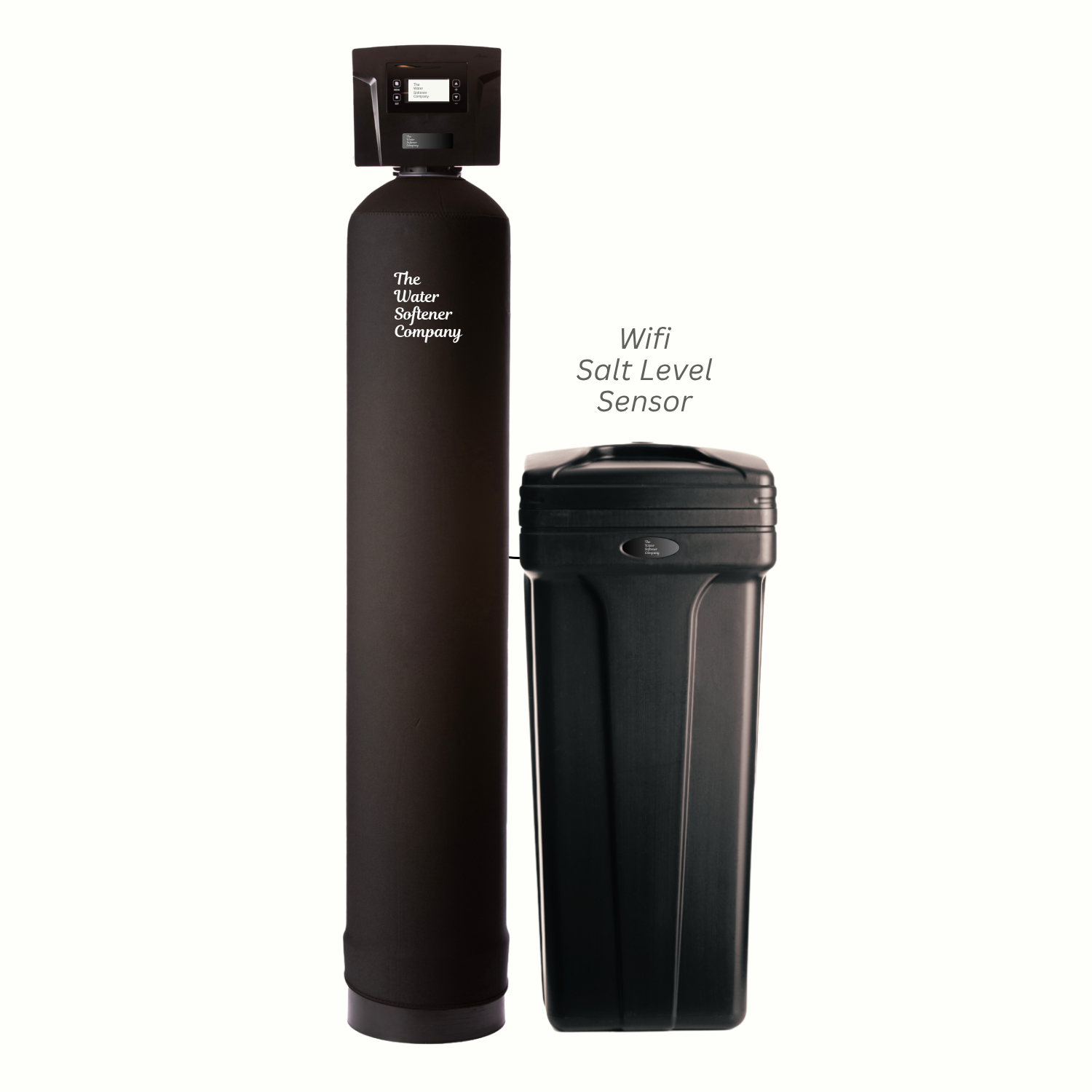
If the film keeps coming back quickly, hard water is likely the cause. A water softener treats the minerals at the source, so there is less for soap to react with. Our Soft Water System is a high-efficiency water softener, and it comes with water hardness test strips to set the hardness level.
Many people also want to know whether a softener actually stops the scale that leads to residue. You can read more about that in this explanation of whether a water softener prevents limescale. For ongoing habits beyond cleaning, our guide on ways to prevent limescale buildup in pipes covers practical steps that help keep minerals from building up in your plumbing.
Frequently Asked Questions
How do you remove soap scum from a shower?
Wet the surface, spray it with a 50/50 mix of white vinegar and warm water, and let it sit for about 10 to 15 minutes so the solution can break down the residue. Scrub with a nylon-bristle brush or sponge, then rinse thoroughly with warm water and wipe dry. Work in small sections so the solution does not dry on the surface before you scrub. Repeat on stubborn spots rather than scrubbing harder, which can scratch tile, acrylic and glass.
Does vinegar remove soap scum from shower walls?
Yes. Soap scum is mostly soap combined with minerals, and the acetic acid in white vinegar helps dissolve that film. A 50/50 solution of white vinegar and water works well on most ceramic tile and glass. Avoid vinegar on natural stone such as marble, granite or limestone, because the acid can etch the surface. For stone, use a pH-neutral cleaner made for that material instead.
Can baking soda remove soap scum from a shower?
Baking soda works as a mild abrasive. Mix it into a paste with a little water or dish soap, apply it to the scummy area, let it sit for a few minutes, then scrub gently and rinse. It is useful on tile grout and textured surfaces where vinegar alone is not enough. Because it is abrasive, test it on an inconspicuous spot first and avoid it on acrylic, which scratches easily.
How do you clean years of soap scum from shower tile?
Heavy, long-term buildup usually needs more than one pass. Start with a vinegar solution and let it dwell for 15 to 20 minutes, then scrub with a nylon-bristle brush. For remaining residue, apply a baking soda paste and scrub again. Rinse well between steps. Stubborn grout lines may need a grout brush. If the film still does not lift, the buildup may be mineral-based hard-water deposits, which need a different approach.
