

Water Softener Sizing for Household Use Explained
Quick Summary
Water softener sizing depends on three numbers: household size, daily water use, and water hardness in grains per gallon. Multiply gallons used per day by hardness to get your daily grain load, then choose a unit that regenerates roughly every three to five days. Most families of four need between 32,000 and 48,000 grains of capacity.
- Test your water hardness in grains per gallon before choosing any unit.
- Multiply daily gallons used by grains per gallon to get your daily grain load.
- Aim for a softener that regenerates every three to five days.
- Very hard water pushes you toward the top of the capacity range.
- Check peak flow rate, not just grain capacity, before you buy.
Table of Contents
- How Much Water Softener Capacity Does a Household Need?
- Testing Your Water Hardness and Reading Grains Per Gallon
- Estimating Daily Water Use and Daily Grain Load
- Step-by-Step Water Softener Size Calculator Walkthrough
- Using a Water Softener Sizing Chart for Your Household Size
- What Size Water Softener for a Family of 4?
- Setting Regeneration Frequency and Choosing Your Softener for Your Home
- Frequently Asked Questions
How Much Water Softener Capacity Does a Household Need?
Last Updated: November 24, 2026
Proper water softener sizing means your unit has enough grain capacity to handle your home's daily hardness load between regenerations. Sizing comes down to three numbers: your household size, your daily water use, and your water hardness in grains per gallon. Multiply those together, and you get the capacity you need.
The goal is simple: a softener that keeps up with your family without wasting salt or water.
Many homeowners assume a bigger tank is always better. That isn't quite true. An oversized softener regenerates less often, which can leave resin sitting in water for long stretches, and it costs more upfront. An undersized one runs out of soft water too fast. The right size sits in the middle.
Here is the basic idea behind the math:
- Daily hardness load: Gallons used per day × grains per gallon of hardness
- Regeneration interval: Total grain capacity ÷ daily hardness load
- Right-sized softener: One that regenerates roughly every few days, not every few hours
For a typical family, the most common setup is a unit with 32,000 to 48,000 grains of capacity. Larger households or very hard water often need more. U.S. Geological Survey guide to water hardness
Testing Your Water Hardness and Reading Grains Per Gallon
Hardness is measured in grains per gallon (GPG). You can't size a softener correctly without knowing this number. Testing is easy and inexpensive, and most homeowners can do it in a few minutes at the kitchen sink. Follow a step-by-step guide to testing well water hardness at home if you want to measure it yourself.
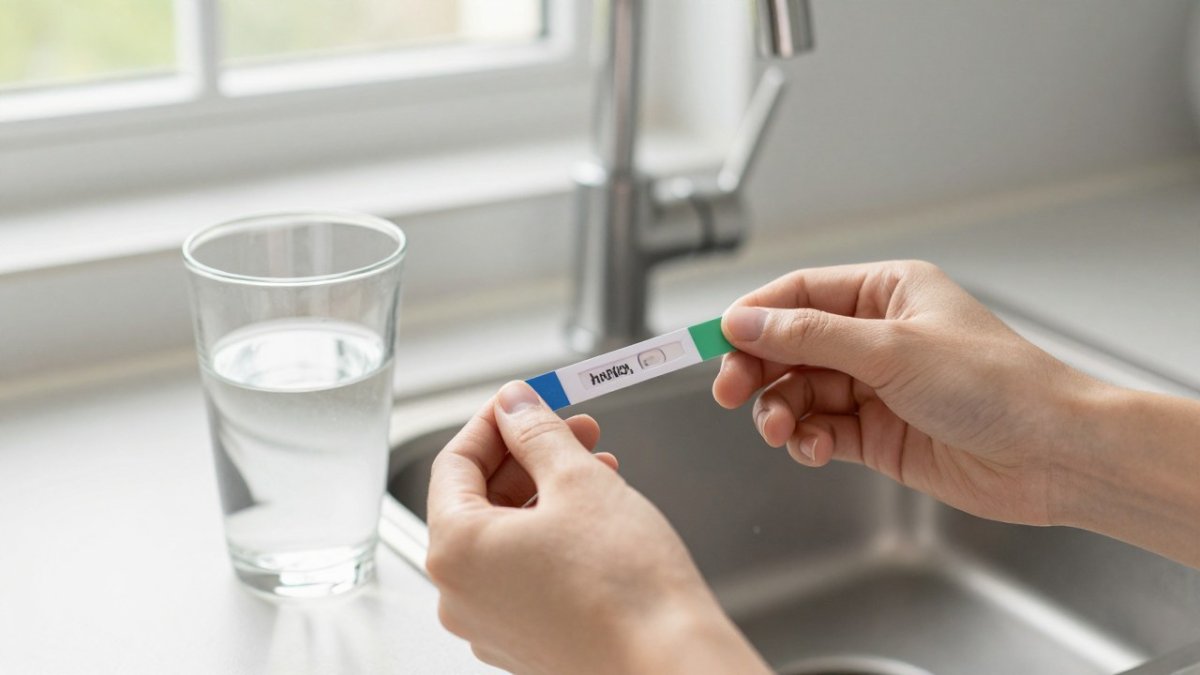
Start with a test strip or drop-based kit. Dip the strip in tap water, wait the time listed on the package, and compare the color to the chart. Write the result down.
Here is how to read the numbers:
- Under 1 GPG: Soft water, no softener needed
- 1 to 3.5 GPG: Slightly hard
- 3.5 to 7 GPG: Moderately hard
- 7 to 10.5 GPG: Hard
- Above 10.5 GPG: Very hard
Test strips give a rough reading. If your water comes from a well, consider a lab test for more accuracy. Well water can also carry iron, which changes how much capacity you need. Watch out: a single test on one day can miss seasonal changes, so test a few times if your supply varies.
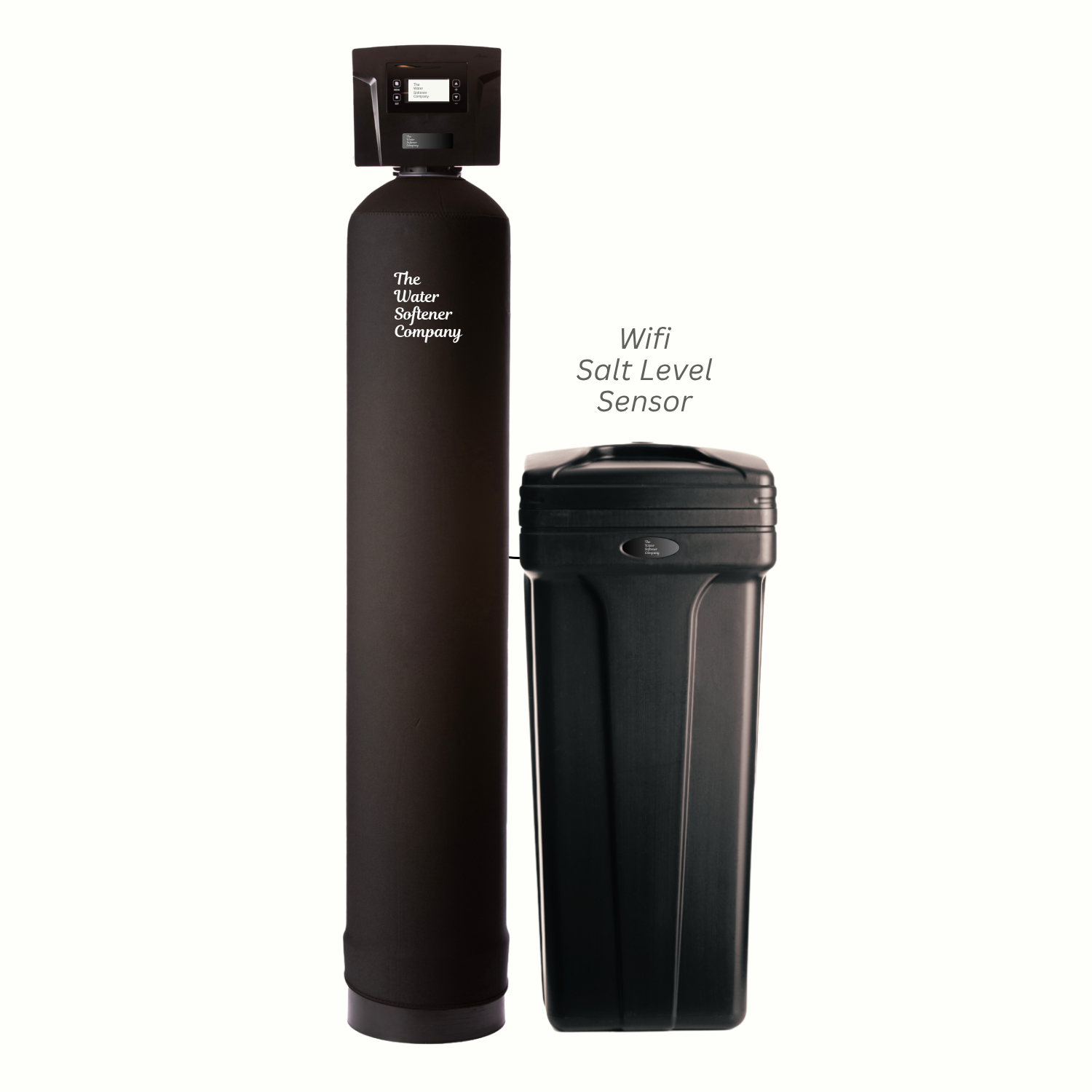
The Soft Water System includes a hardness tester so you can set the hardness level right away.
Estimating Daily Water Use and Daily Grain Load
Your daily water use drives your daily grain load. The average person uses a range of gallons each day, but your actual number depends on habits, fixtures, and appliances.
Check your water bill first. Divide your monthly usage by the number of days in the billing cycle, then divide again by the number of people in your home. This gives you a rough gallons-per-person-per-day figure.
Next, multiply that by your household size. Then multiply the result by your hardness in grains per gallon. The final number is your daily grain load.
Common mistakes include:
- Forgetting laundry, dishwasher, and irrigation use
- Ignoring guests who stay for long periods
- Using a single-day reading instead of a monthly average
Step-by-Step Water Softener Size Calculator Walkthrough
Use this process to size your softener. Each step builds on the one before it.
- Find your hardness. Use your test result in grains per gallon.
- Count your household. Include everyone who lives in the home full-time.
- Estimate daily water use. Use your bill or a typical per-person figure.
- Calculate daily grain load. Multiply gallons per day by hardness.
- Pick a capacity. Choose a unit that regenerates every three to five days.
- Check the flow rate. Make sure the unit can handle peak demand, like showers running at the same time as laundry.
Many homeowners stop at step five and miss the flow rate. A softener with enough grain capacity can still struggle if several fixtures run at once. Check the flow specs before you buy.
Using a Water Softener Sizing Chart for Your Household Size
A sizing chart gives you a quick reference. Charts pair household size with a typical capacity range, assuming average water use and moderate hardness. They make a good starting point, but they don't replace your own math.
| Household Size | Typical Daily Use (gallons) | Suggested Grain Capacity |
|---|---|---|
| 1 to 2 people | 100 to 150 | 24,000 to 32,000 |
| 3 to 4 people | 200 to 300 | 32,000 to 48,000 |
| 5 to 6 people | 300 to 400 | 48,000 to 64,000 |
| 7 or more people | 400+ | 64,000 or higher |
Use the chart to get in the right range, then adjust for your actual hardness and use. Very hard water pushes you toward the top of the range.
The chart has a hidden assumption worth naming: the capacities listed are advertised grain capacities, not usable capacity at a given salt dose. A 48,000-grain unit in the chart may deliver closer to 32,000 to 40,000 grains of actual hardness removal depending on how it is programmed. That means the chart range is a starting bracket, not a guarantee. If you want the unit to regenerate every three to five days rather than every day, check the usable capacity at the salt dose you plan to use, not just the tank rating.
A second assumption is water use per person. The chart uses a mid-range figure, but households vary widely depending on fixture age, laundry habits, and whether irrigation runs through the softener. If your water bill shows usage well above the chart's gallons column, move up a capacity step even if your household size fits the lower row.
Our 1000 model with 34K grain capacity suits smaller homes with one to four bathrooms. The 2000 model with 64K grain capacity suits four to six bathrooms, and the 3000 model with 86K grain capacity suits six to eight bathrooms. When comparing these to the chart, treat the model capacity as the tank rating and confirm the usable capacity at your planned salt dose before you commit.
What Size Water Softener for a Family of 4?
A family of four typically needs between 32,000 and 48,000 grains of capacity for moderately hard water. If your water is very hard, or you use a lot of water, step up to a larger unit.
Here's a quick example. A family of four uses about 250 gallons a day. With water at 10 grains per gallon, the daily grain load is 2,500 grains. A 32,000-grain unit would regenerate about every 12 to 13 days. A 48,000-grain unit would regenerate about every 19 days, which is still fine. Both work, but the larger unit gives you more buffer.
For a family of four with four bathrooms, the 2000 model's 64K grain capacity offers extra room for peak use and future changes.
Setting Regeneration Frequency and Choosing Your Softener for Your Home
Regeneration is how the softener cleans its resin bed. It flushes the resin with a brine solution made from salt, then rinses the brine to drain. Most modern softeners regenerate on demand, meaning they run the cycle only when the resin nears its limit rather than on a fixed clock.
A good target is regeneration every three to five days. That keeps the resin fresh and avoids wasting salt. If your unit regenerates daily, it may be undersized. If it regenerates once a month, it may be oversized.
Watch out: a softener that regenerates every day is usually a sign that either the capacity is too small for the daily grain load or the hardness setting is programmed too high, and both waste salt and water.
Water use during regeneration also matters. Each cycle sends a few dozen gallons to drain, depending on the unit and settings. A unit that regenerates every three days uses far less regeneration water over a year than one that regenerates daily, even if the per-cycle volume is similar. That is why the three-to-five-day target is a practical efficiency guide, not just a convenience.
The Soft Water System regenerates based on actual usage and includes an automatic refresh that runs during periods of extended non-use. You can explore the full line on our Soft Water System page and see how it fits your home.
Maintenance costs also matter. Salt is the main ongoing expense, and it depends on your hardness, capacity, and dose setting. Before you buy, ask what salt dose the unit uses at the capacity you need, not just what the tank is rated to hold.
Frequently Asked Questions
How do I determine what size water softener I need for my house?
Start with your household size, your water hardness in grains per gallon, and your estimated daily water use. Start from your actual daily water use, then multiply that volume by your hardness level to get your daily grain load. Multiply the daily grain load by the number of days you want between regenerations, and choose a grain capacity that covers that figure. Check the efficient operating capacity rather than the advertised number.
Is it better to oversize a water softener?
Oversizing is not always better. A unit that is too large regenerates less often, which can let the resin sit too long and lose efficiency, and it uses more salt and water per regeneration. A unit that is too small regenerates too frequently, wastes water and salt, and may not keep up with peak demand. Aim for a capacity that regenerates roughly every 5 to 7 days for your household, and account for future changes such as new occupants or a larger water heater.
What is the difference between a 48,000-grain and a 64,000-grain water softener?
The number refers to the grain capacity, meaning how many grains of hardness the resin can remove before it must regenerate. A 64,000-grain unit can handle about one-third more hardness than a 48,000-grain unit before regenerating, so it suits larger households or very hard water. The 2000 model with 64K grain capacity in our lineup is rated for households with 4 to 6 bathrooms, while a 48,000-grain setup is better suited to smaller households with moderate hardness.
How often should a properly sized water softener regenerate?
A properly sized water softener regenerates on a schedule that matches your household's demand. Regenerating much more often than your usage suggests can mean the unit is undersized or the hardness setting is too high. Check your regeneration log against your water usage records, and adjust the hardness setting if the frequency does not match your household's demand.
