

Does Water Softening Prevent Limescale Buildup
Last Updated: October 26, 2026
Quick Summary
Water softening prevent limescale by removing calcium and magnesium minerals from incoming water before they build up on pipes, fixtures, and appliances. However, a water softener cannot dissolve limescale deposits that already exist and requires separate cleaning methods for existing buildup.
- Water softeners use ion exchange to replace calcium and magnesium with sodium in hard water
- Softened water helps extend the life of water heaters, washing machines, and dishwashers by reducing scale accumulation
- A water softener treats only incoming water and cannot remove limescale already built up inside plumbing or appliances
- Water hardness levels range from soft at 0-1 GPG to very hard at 7+ GPG
- Water softeners require ongoing salt additions and add sodium to your water supply
Table of Contents
- How Water Softening Prevents Limescale Buildup
- Hard Water Signs in the Home You Should Know
- How to Test Water Hardness Before Installing a System
- Does a Water Softener Remove Existing Limescale
- Water Softener vs Water Descaler: What's the Difference
- Maintaining Your Water Softener for Long-Term Scale Prevention
- Choose Your Water Softening System Today
- Frequently Asked Questions
How Water Softening Prevents Limescale Buildup
Water softening can help prevent limescale by removing the minerals that cause it to form on new surfaces. When hard water flows through a water softener, calcium and magnesium ions get trapped and replaced with sodium. This process helps prevent those minerals from building up on your pipes, fixtures, and appliances going forward.
The key thing to understand: a water softener can help prevent limescale buildup on new surfaces. It doesn't automatically dissolve deposits that already exist. Think of it like a shield that helps limit future buildup rather than a cleaner that removes old stains.
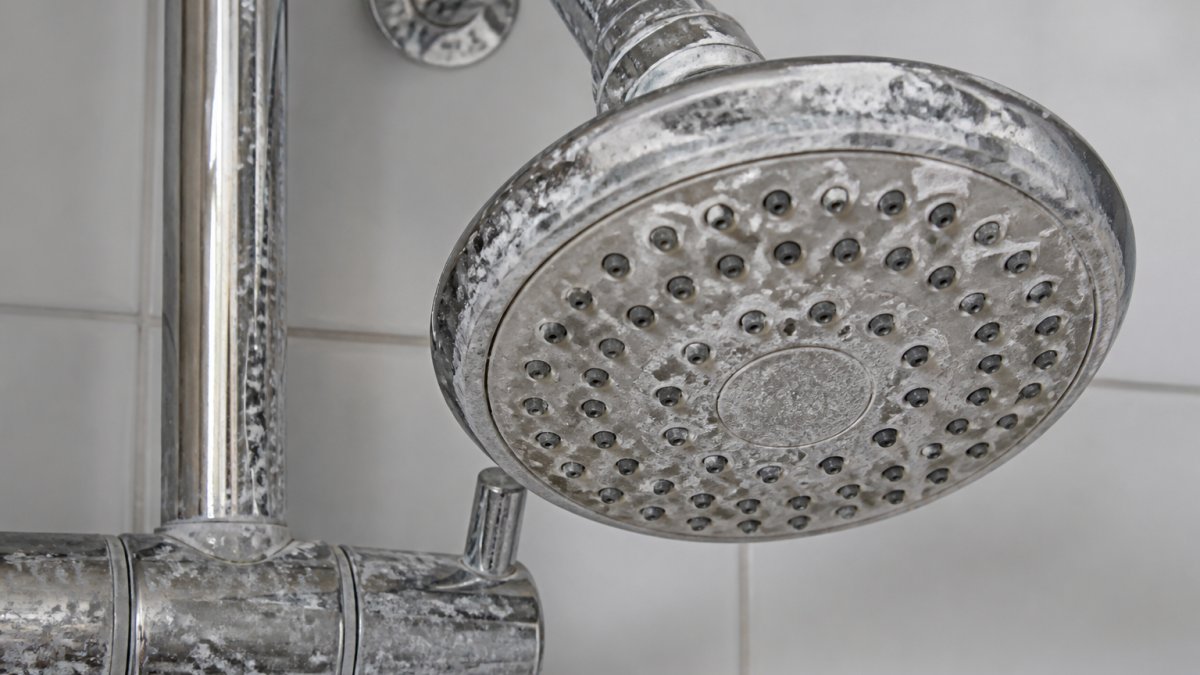
Here's how the process works. Hard water contains dissolved calcium and magnesium. These minerals can stick to surfaces as water flows through. Over time, they can build deposits. A water softener intercepts this water at your home's entry point before it reaches fixtures. The system exchanges those hardness minerals for sodium through ion exchange. Softened water can help reduce new scale deposits.
The practical benefit is real. According to Consumer Reports' analysis of water softening, softened water helps reduce scale buildup on fixtures and can extend the life of water-using appliances. Your water heater, washing machine, and dishwasher all benefit because scale doesn't accumulate inside them.
Hard Water Signs in the Home You Should Know
Hard water leaves obvious signs around your house. If you see these, you likely have a problem worth addressing.
White, chalky buildup on faucets and showerheads can be a sign of mineral deposits. Over time, deposits can become difficult to remove.
Soap may not lather as well when you wash your hands or shower. Hard water can interfere with soap lather.
Dull, stiff laundry can be associated with hard water. The Soft Water System listing describes benefits for laundry, clothing, and skin.
Spots and film on glassware and dishes can be associated with hard water.
Dry, itchy skin and dull hair are concerns some households have when considering water softening. The Soft Water System listing describes benefits for hair and skin.
Higher water heating costs are a concern associated with scale buildup inside a water heater.
Appliance problems can be a concern for households dealing with hard water.
If you're seeing several of these signs, testing your water hardness makes sense.
How to Test Water Hardness Before Installing a System
Testing your water hardness can help you understand your water. You can test well water hardness at home using simple methods.
Home test strips are an option. Dip the strip in tap water according to its instructions. The color changes indicate your hardness level.
The scale may read in grains per gallon (gpg) or parts per million (ppm).
Water hardness levels explained:
| Hardness Level | GPG Range | PPM Range | What It Means |
|---|---|---|---|
| Soft | 0-1 | 0-60 | No treatment needed |
| Slightly hard | 1-2 | 61-120 | May benefit from softening |
| Moderately hard | 2-3.5 | 121-210 | Softening recommended |
| Hard | 3.5-7 | 211-420 | Softening strongly recommended |
| Very hard | 7+ | 420+ | Softening essential |
Does a Water Softener Remove Existing Limescale
This is a question homeowners may have, and the answer matters for your expectations.
A water softener does not remove limescale that has already built up in your pipes, fixtures, or appliances. The system treats incoming water. It can't reach inside your plumbing or inside an appliance to dissolve old deposits. Culligan's technical guidance on water softener effectiveness confirms that conventional softening removes calcium and magnesium from new water but won't eliminate existing scale buildup.
A softener treats incoming water. Existing buildup may remain, so it may need separate attention.
For existing limescale, a separate approach may be needed. You can remove limescale from showerheads.
Here's what this means in practice:
- A softener treats incoming water
- Existing deposits may need separate attention
Existing deposits may need attention separately from treating incoming water.
Water Softener vs Water Descaler: What's the Difference
These two systems address hard water in different ways. Understanding the difference can help you consider your options.
A water softener removes hardness minerals. It uses ion exchange to swap calcium and magnesium for sodium. The Soft Water System listing describes benefits for hair, skin, clothing, laundry, glassware, dishware, appliances, water heaters, and plumbing. It requires salt to be added.
Which one prevents limescale better?
Softeners have trade-offs:
- They add sodium to your water (a consideration for some households, according to Consumer Reports' guidance on water softener safety)
- They require ongoing salt purchases
- Installation is more involved
- They're more expensive upfront
Maintaining Your Water Softener for Long-Term Scale Prevention
The Soft Water System listing describes low maintenance, with salt added as needed. Learn about the maintenance costs and requirements for keeping your system effective long-term.
Add salt as needed. The Soft Water System listing describes low maintenance and says to add salt.
The Soft Water System is described as low maintenance, with salt added as needed.
Choose Your Water Softening System Today
If you're dealing with hard water and limescale buildup, a water softener is one option to consider. The Soft Water System listing describes benefits for appliances and water quality.
The Water Softener Company offers professional-quality systems for city or well water. Our Soft Water System is described as high efficiency and low maintenance. The listing states that it can save as much as 60% less salt and water compared to older softeners. The system includes a hardness tester.

For homes with additional water quality concerns, our Carbon Softener System is listed as removing chlorine, unpleasant tastes and odors, and other specified substances alongside softening. Our Lifeguard systems are listed with filtration and softening features.
The Soft Water System is made in the USA with globally sourced materials and includes a five-year full system warranty. Its listing describes easy installation and low maintenance, with salt added.
Hard water won't fix itself. The Water Softener Company offers systems designed to deliver clean, soft water for your home.
Frequently Asked Questions
Does water softening prevent limescale buildup from forming?
Water softening removes calcium and magnesium minerals from incoming water. A softener treats incoming water; it does not automatically remove limescale that has already accumulated.
How long does it take for a water softener to stop limescale from forming?
A water softener treats incoming water. The verified product information does not specify how long it takes to affect limescale buildup.
Will a water softener remove the limescale already stuck to my pipes and fixtures?
A water softener treats incoming water; it does not automatically dissolve deposits that have already built up. Existing deposits may need separate attention.
What is the difference between a water softener and a water descaler?
A water softener uses ion exchange to remove hardness minerals such as calcium and magnesium. The verified product information does not establish how water descalers work or compare their effectiveness with softeners.
Hard water affects nearly every aspect of your home, from the appearance of your fixtures to the health of your skin and hair. A water softener stops new limescale from forming and gives you the soft, clean water your family deserves. Get started with The Water Softener Company and experience better water for better living.
