

Is Soft Water Safe for Plants? What to Know Before You Water
Last Updated: November 1, 2026
Quick Summary
Is soft water safe for plants? Occasional use usually is, but regular heavy use can raise sodium levels in soil. Sodium from common softeners builds up over time, especially in containers and poorly draining soil, so softened water should not be the only source you use for plants.
- Softened water swaps calcium and magnesium for sodium, which plants can notice.
- Sodium accumulates in soil and can stress roots, even when the soil feels moist.
- Signs include brown leaf edges, stunted growth, crusty residue, and wilting in moist soil.
- Test soil electrical conductivity over time and watch for a rising trend.
- Use rainwater or untreated water for sensitive houseplants and outdoor beds.
Table of Contents
- Why Softened Water Is Different From Hard Water
- Is Soft Water Safe for Plants? The Short Answer
- How Sodium Builds Up in Soil and Harms Roots
- Can You Use Softened Water in a Garden?
- Best Water for Houseplants and Sensitive Plants
- Alternatives to Softened Water for Plants
- Setting Up an Outdoor Faucet Bypass for Your Garden
- Your Next Step: Check Your Water Before Watering Again
- Frequently Asked Questions
Why Softened Water Is Different From Hard Water
Hard water carries dissolved calcium and magnesium, and softened water has had most of those minerals removed. That chemical difference is the reason gardeners and houseplant owners ask whether softened water is safe for their plants.
Most home softeners use ion exchange. The unit swaps calcium and magnesium for sodium, which changes the water's makeup in a way plants can notice. Understanding that swap is the first step to deciding what to water with.
- Hard water: rich in calcium and magnesium
- Softened water: minerals swapped for sodium
- Result: sodium levels rise, while total mineral content may stay similar
For more background on how softening affects water quality in general, see US Environmental Protection Agency guidance on drinking water treatment. Our guide Does Water Softening Improve Water Pressure? also covers related effects of softening on your home's water system.
How Ion-Exchange Softeners Add Sodium
Ion-exchange softeners trade hardness minerals for sodium ions as water passes through resin beads. The resin is recharged periodically with salt, which is why a softener needs a salt supply. Potassium-based salt is a less common option that some owners choose instead.
Sodium is the detail that matters for plants.
Is Soft Water Safe for Plants? The Short Answer
Occasional use of softened water is generally not a problem for most plants. Regular, heavy use is where the risk grows, especially in containers and poorly draining soil. Sodium from common sodium-chloride softeners can gradually build up in soil, even when softened water is used only occasionally (Water softeners for watering).
So the short answer is: softened water is usually safe in small amounts, but it should not be your only source for plants over the long term.
How Sodium Builds Up in Soil and Harms Roots
Sodium behaves differently from the nutrients plants need. It does not break down, volatilize, or get consumed by roots in meaningful amounts. Instead, it stays in the soil solution and accumulates whenever the water leaving the soil (through evaporation, plant transpiration, or drainage) carries less sodium than the water going in.
The mechanism matters because sodium harms plants in two ways. First, high sodium competes with potassium and calcium for uptake, so plants can show deficiency symptoms even when those nutrients are present in the soil. Second, sodium disperses soil clay particles, which collapses soil structure, reduces pore space, and slows water infiltration.
Signs of sodium stress can include:
- Brown leaf edges or tip burn, especially on older leaves
- Stunted growth and smaller new leaves
- Crusty white residue on the soil surface or pot rim
- Wilting even when the soil is moist
- Poor drainage and a hard, crusted soil surface in containers
Salt-sensitive plants, such as many ferns, calatheas, and young seedlings, show these signs first. A more detailed look at how softened water affects plant health is covered in University extension guidance on salinity and irrigation water.
How to Test for Sodium Buildup
You do not need a laboratory to get a useful read on your soil. A practical sequence to follow:
- Test your irrigation water first. A basic electrical conductivity (EC) meter gives a quick reading of total dissolved salts.
- Test the soil, not just the water. A saturated paste extract test from a soil lab reports the sodium adsorption ratio (SAR) and EC of the root zone. Home test kits can flag elevated salts but are less reliable for sodium specifically.
- Watch the trend, not a single number. Take a baseline reading before you change watering practices, then retest every few months. Rising EC in a container that gets only softened water is the clearest early warning.
- Check drainage. If water pools on the surface or drains slowly, sodium is more likely to stay in the root zone regardless of what your test says.
What to Do After Sodium Has Accumulated
Recovery depends on how badly the soil is affected and whether drainage allows flushing.
- Switch the water source first. Stop adding sodium before you try to remove it. Use untreated tap water, rainwater, or another low-sodium source for the affected plants.
- Leach the soil where drainage permits. In outdoor beds with good drainage, apply several inches of low-sodium water slowly enough to move salts below the root zone. Do this in cool weather to reduce plant stress.
- Replace potting mix in containers. Leaching a container is possible but often less effective than starting fresh, because potting mixes can hold sodium on the organic matter. For badly affected houseplants, repotting in fresh mix is usually the faster fix.
- Recheck after recovery. Retest EC and visible symptoms a few weeks after leaching or repotting to confirm the trend is moving in the right direction.
Can You Use Softened Water in a Garden?
You can use softened water in a garden, but only sparingly. Garden beds with good drainage and regular rainfall handle occasional softened water well. Large vegetable beds watered with softened water every day are a different story.
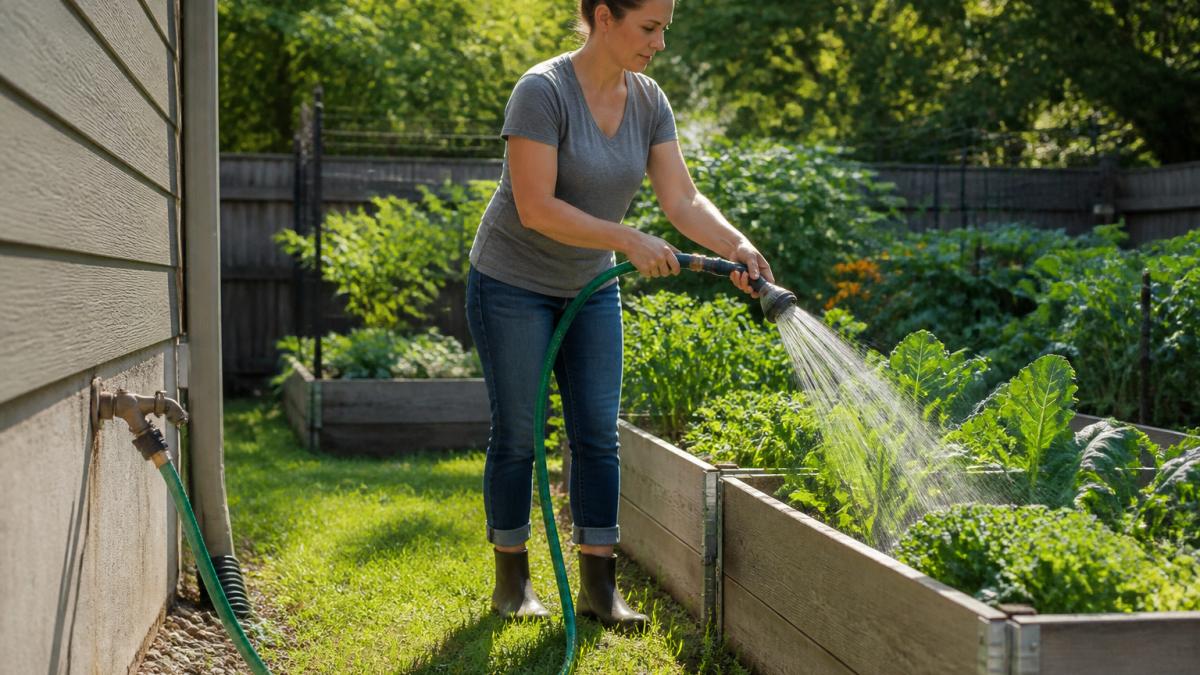
A common approach is to keep softened water for indoor plants you water by hand, and use untreated water for outdoor beds. That split protects your garden soil while still using the water you already have.
Best Water for Houseplants and Sensitive Plants
For houseplants, the best water is rainwater, untreated tap water, or filtered water that has not been softened. Many houseplant owners find that rainwater gives the most consistent results. If your plants are salt-sensitive, avoid softened water altogether.
Our Best Water Softener for Well Water guide helps readers who rely on a well choose a system that fits their setup.
Alternatives to Softened Water for Plants
Most guides list alternatives without telling you how they compare. The trade-offs below are the part that actually helps you choose.
Rainwater
Rainwater is the closest thing to an ideal plant water: low in sodium, low in alkalinity, and free at the point of collection. The trade-offs are storage and consistency. A rain barrel sized for a small garden fills quickly in spring and runs dry in a dry spell, and stored rainwater needs a screen and occasional cleaning to keep mosquitoes and algae out. For houseplants, a covered barrel or a few food-grade jugs refilled from a downspout are usually enough.
Untreated Tap Water (Outdoor Spigot or Bypass)
If your home has hard water, the untreated supply at an outdoor spigot is often the simplest alternative. It delivers calcium and magnesium rather than sodium, and it is available on demand. The catch is that not every home has an outdoor line that bypasses the softener, many are tied into the softened loop. A bypass valve or a dedicated untreated line solves this, but it is a plumbing change, not a free fix.
Reverse Osmosis (RO) Water
RO removes sodium and most other dissolved minerals, which makes it a good fit for salt-sensitive houseplants. The trade-offs are real: RO systems waste water as reject brine, produce water slowly, and strip out the calcium and magnesium that some plants use. For a few sensitive houseplants, a small under-sink RO unit is practical; for an entire garden, it usually is not.
Distilled Water
Distilled water is essentially mineral-free and works well for sensitive plants in small quantities. The trade-off is cost and packaging, it is sold by the gallon and is not a realistic routine source for anything beyond a handful of containers.
Potassium-Chloride Softeners
A potassium-based softener swaps hardness minerals for potassium instead of sodium. Potassium is a plant nutrient, so the softened water is generally friendlier to plants than sodium-softened water. The trade-offs are cost (potassium chloride pellets typically cost more than sodium chloride) and the fact that potassium still accumulates as a salt, it is better, not neutral.
How to Choose
| Source | Sodium level | Best for | Main trade-off |
|---|---|---|---|
| Rainwater | Very low | Houseplants, seedlings, sensitive species | Storage and seasonal supply |
| Untreated tap (bypass) | Low to moderate | Outdoor beds, vegetables | Requires a bypass line |
| Reverse osmosis | Very low | A few salt-sensitive houseplants | Water waste and slow output |
| Distilled | Very low | Small numbers of containers | Cost per gallon |
| Potassium-softened | Low (potassium, not sodium) | Whole-home use with plant watering | Higher salt cost; still accumulates |
Our Soft Water System is a whole-home softening system, so comparing it against these alternatives can help you decide what to keep softened and what to leave alone.

Setting Up an Outdoor Faucet Bypass for Your Garden
A bypass valve lets you send untreated water to outdoor faucets while indoor fixtures use softened water. A bypass is a plumbing change that a licensed plumber can install during or after softener setup. Ask a licensed plumber in your area to confirm the right layout.
Once the bypass is in place, check the outdoor line periodically to confirm it is delivering untreated water as intended.
Your Next Step: Check Your Water Before Watering Again
Start by finding out whether your home uses softened water and whether your outdoor faucet is connected to it. A simple water hardness test kit gives you a baseline, and our How to Test Well Water Hardness at Home guide walks you through the process.
If you are planning a softener or want outdoor water kept untreated, our Lifeguard Filter & Softener and Soft Water System are built for whole-home setups that can include an outdoor bypass. Get in touch with The Water Softener Company to confirm which system fits your water and your garden.

Frequently Asked Questions
Is it okay to water plants with softened water?
Occasional watering with softened water is generally tolerated, especially when plants also receive rainfall, which helps flush excess sodium below the root zone. The concern is repeated use over time. Sodium from common sodium-chloride softeners can accumulate in soil and reduce water uptake by roots. If softened water is your only source, watch for leaf browning, wilting, and stunted growth, and consider a bypass line for outdoor faucets so your garden gets untreated water.
Can softened water damage houseplants?
It can, particularly for sensitive houseplants grown in small pots where sodium has little room to leach out. Potted plants lack the soil volume and natural rainfall that dilute sodium in a garden bed. Over months of regular watering, salt can build up along the potting mix surface, causing brown leaf tips and poor growth. If your houseplants are declining, switch to untreated cold water or rainwater and repot with fresh mix.
Can you use softened water in a garden?
You can, with care. Using softened water occasionally on established garden beds carries low risk, especially in areas with regular rainfall. Avoid relying on it exclusively for vegetables and salt-sensitive plants, and avoid using it on lawns or beds that rarely get rain. Running a bypass to an outdoor spigot is the simplest way to keep softened water out of the garden entirely.
What is the best alternative to softened water for plants?
Rainwater collected in a barrel is the best option for most plants because it is naturally soft and free of added sodium. Untreated well or municipal water works well too, provided it is not heavily salted. Where hard water is the only source, you can water with untreated supply and amend soil with organic matter to improve drainage. Potassium chloride softeners are another option, since they avoid adding sodium, though they cost more to operate.
