

Impact of Hard Water on Appliances: What Fails First and Why
Quick Summary
Hard water's dissolved calcium and magnesium turn into scale when heated, which makes appliances work harder and can cause them to fail. The impact of hard water on appliances shows up first in water heater elements, kettles and shower heads, where scale insulates hot surfaces and raises energy use.
- Heated hard water forms calcium and magnesium scale that can cause inefficient operation or failure of water-using appliances.
- Hardness above 7 gpg makes descaling and softening practical maintenance items.
- Flush a tank water heater once a year to remove loose sediment.
- Run a vinegar cycle in the dishwasher once a month and use a rinse aid in every load.
- Test untreated water at a cold tap that bypasses the softener to get the true incoming hardness.
Table of Contents
- What Hard Water Is and How Mineral Scale Forms
- How to Test Your Water Hardness and Read the Results
- Effects on Water Heaters, Heating Elements and Plumbing
- Signs of Hard Water in Dishwasher and How to Fix Them
- Hard Water Dishwasher Detergent: Choosing the Right Formula
- Laundry Detergent for Hard Water and Washing Machine Protection
- Booking Your Water Test and Choosing a Softener Size
- Frequently Asked Questions
What Hard Water Is and How Mineral Scale Forms
Last Updated: November 7, 2026
Hard water carries dissolved calcium and magnesium, and heat turns those minerals into scale, which is a major part of the impact of hard water on appliances. Heated hard water forms calcium and magnesium mineral scale that can contribute to inefficient operation or failure of water-using appliances (Nebraska Extension, Hard Water and Your Appliances).
Water picks up minerals as it moves through rock and soil. When that water is heated, the minerals come out of solution and stick to hot surfaces. That is why scale shows up first on water heater elements, kettles and shower heads.
Scale is the crusty white or gray buildup you see around faucets and inside pipes. It is the same material, just in a different place. Over time, it narrows passages and forces appliances to work harder.
Virginia Tech Extension notes that drinking hard water does not present a health risk, but it can cause nuisance problems and mineral scale (Virginia Tech Extension, Hardness in Household Water). The real concern is what it does to your equipment.
How to Test Your Water Hardness and Read the Results
Testing tells you how hard your water is before you spend money on fixes, and it gives you a baseline for judging appliance risk. Hardness is usually measured in grains per gallon (gpg) or parts per million (ppm); 1 gpg equals about 17.1 ppm. Some labs report milligrams per liter (mg/L), which is numerically the same as ppm. Knowing which unit you are reading matters, because a result of "120" means very different things in ppm versus gpg.
Here is a simple way to test at home:
- Buy test strips from a hardware store or use the hardness tester included with many softener systems.
- Run a cold tap for about one minute to clear the line.
- Dip the strip in the water for the time listed on the package.
- Compare the color to the chart on the package.
- Write down the reading in grains per gallon, and note the unit if the chart uses ppm.
Use this rough guide to interpret the result for appliance risk:
- Under 1 gpg: soft water; low scale risk for most appliances.
- 1 to 3.5 gpg: slightly hard; scale can still form in hot-water appliances over time.
- 3.5 to 7 gpg: moderately hard; expect visible film on dishes and faster buildup in water heaters.
- 7 to 10.5 gpg: hard; descaling and softening become practical maintenance items.
- Over 10.5 gpg: very hard; scale-related efficiency loss and repair risk rise noticeably, especially where water is heated.
Strips are fast and cheap, but they are approximate. If your result is borderline or you are sizing a treatment system, a laboratory test or a professional titration test gives a more precise number and can also report iron, manganese, and pH, which affect how hardness behaves in appliances. If you have a well, test at least once a year, since hardness can change over time. For a step-by-step guide to testing well water specifically, see How to Test Well Water Hardness at Home.
Watch out: a single strip reading taken right after a softener regenerates can understate your raw water hardness; test untreated water at a cold tap that bypasses the softener if you want the true incoming number.
Effects on Water Heaters, Heating Elements and Plumbing
Scale does its worst damage where water gets hot, and understanding the impact of hard water on appliances starts there. As water temperature rises, calcium and magnesium come out of solution and deposit on hot surfaces. In a tank water heater, that means the bottom of the tank and the heating elements; in a tankless unit, it means the heat exchanger. A thick layer of scale acts like insulation, so the heater runs longer to reach the same temperature. That means higher energy bills and more wear on the unit. Over time, the extra heat trapped against metal can shorten element life and, in tanks, contribute to popping or rumbling as water boils under sediment.
Pipes and valves are affected too. Scale narrows the inside of pipes over time, which lowers water pressure at the faucet. Valves can stick, and fixtures like shower heads clog. The effect is gradual, so the first sign is often a slow drop in flow rather than a sudden failure.
Appliance-specific maintenance helps:
- Tank water heater: flush the tank once a year to remove loose sediment, and check the anode rod; replace it when it is badly corroded. If you hear popping or rumbling, that usually means heavy scale on the bottom, and ignoring it can lead to overheating and tank damage.
- Tankless water heater: follow the manufacturer's descaling instructions, typically a vinegar or manufacturer-approved descaler flush, and repeat at the interval the manual specifies for your hardness level.
- Washing machine: run an occasional empty hot cycle with a washing machine cleaner to clear mineral buildup inside the drum and hoses.
- Dishwasher: clean with a vinegar cycle once a month and use a rinse aid in every load.
- Faucets and shower heads: soak removable fixtures in vinegar to dissolve scale, and clean aerators when flow drops.
Some practical steps help across the whole home:
- Consider a whole-home system like our Soft Water System ($1,699.00), which is designed to soften water throughout your home.
- Learn how softening affects limescale in Does Water Softening Prevent Limescale Buildup, and see 7 Ways to Prevent Limescale Buildup in Pipes for methods that work without a softener.
Watch out: descaling chemicals and vinegar can damage some heat exchangers and seals if left too long or used at the wrong concentration; always follow the manufacturer's instructions and never mix descalers with other cleaners.

The table below summarises the appliance-specific maintenance steps and their timing, as described in the article.
| Appliance | Maintenance | Frequency or sign |
|---|---|---|
| Tank water heater | Flush tank to remove loose sediment | Once a year |
| Tank water heater | Check and replace corroded anode rod | When badly corroded |
| Tank water heater | Address popping or rumbling sounds | Signs of heavy scale on bottom |
| Tankless water heater | Descale per manufacturer instructions | Interval set by manual for hardness level |
| Washing machine | Run empty hot cycle with washing machine cleaner | Occasionally |
| Dishwasher | Vinegar cycle | Once a month |
| Faucets and shower heads | Soak removable fixtures in vinegar | When flow drops |
Signs of Hard Water in Dishwasher and How to Fix Them
Dishwashers show hard water problems fast. Look for these signs:
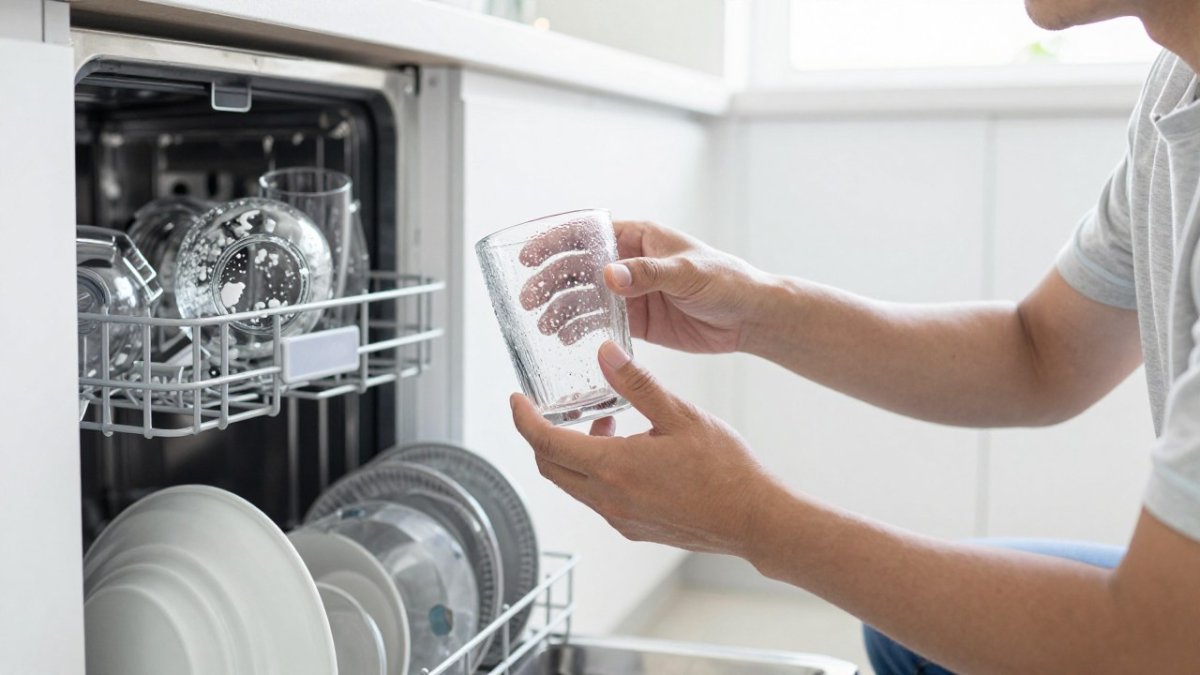
- Cloudy glassware that won't clear
- White spots on dishes and silverware
- A thin film on the inside of the machine
- Dishes that feel rough or chalky
- Soap scum build up on the door seal
Most of these problems come from minerals left behind after the water evaporates. Clean the machine with a vinegar cycle once a month, and run a rinse aid in every load. A softener makes the biggest difference, because it removes the minerals before they reach the dishwasher.
Hard Water Dishwasher Detergent: Choosing the Right Formula
Not every detergent works well with hard water. Look for these features:
- Built-in water softening agents
- Phosphate-free formulas that still contain sequestering agents
- A separate rinse aid for glassware
Powder and gel detergents often perform differently, so test one brand for two weeks before deciding. Using more detergent does not fix the problem. It can leave more residue behind.
Laundry Detergent for Hard Water and Washing Machine Protection
Hard water makes laundry feel stiff and dull. Minerals bind to fabric fibers and stop soap from rinsing away. Clothes can look gray over time, and towels lose their softness.
Choose a detergent that includes a water-softening builder, and use the recommended amount, not extra. Run an occasional empty cycle with a washing machine cleaner to clear mineral buildup inside the drum and hoses.
A water softener helps here too. Clothes come out softer, and you may use less detergent over time.
Booking Your Water Test and Choosing a Softener Size
The right softener size depends on your household's water use and hardness reading. Start with your test result, then count the bathrooms in your home. Our Soft Water System is sized by bathroom count:
- 1 to 4 bathrooms: Soft Water System Model 1000 ($1,699.00)
If you want help choosing, book your water test with our team. You can also read Best Water Softener for Well Water if your home runs on a private well.
Our Carbon Softener System ($2,199.00) adds coconut carbon and KDF filtration, which reduces chlorine, unpleasant tastes and odors along with hardness. The Lifeguard Filter & Softener ($2,399.00) pairs a whole-home filter with a softener in one system.
Our Sentry Plus Water Filter and Salt-free Softener Alternative ($1,899.00) is a whole-house filter listed as reducing hard water scale, so choose it based on your test results and goals.
Last Updated: November 7, 2026
Frequently Asked Questions
Can hard water ruin your appliances?
Yes, over time. Heated hard water forms calcium and magnesium mineral scale that can contribute to inefficient operation or failure of water-using appliances, according to Nebraska Extension. Scale narrows pipes, coats heating elements and reduces the efficiency of water heaters, dishwashers and washing machines. Early signs include longer heat-up times, spotted dishes and stiff laundry. Testing your water hardness is the first step to knowing how much risk your home carries.
Should I use more detergent if I have hard water?
Usually not more, but the right kind. Minerals in hard water bind to soap and detergent, so less cleaning agent reaches the fabric or dishes and residue builds up. Adding more detergent often makes the problem worse. Choose a formula designed for hard water, which contains builders or chelating agents that tie up minerals, and follow the dosing on the label. If results don't improve, test your hardness and consider a softener.
How often should you flush a water heater with hard water?
Flush your water heater at least once a year if you have hard water, and more often if your hardness is high. Sediment and scale collect at the bottom of the tank and reduce heating efficiency. Shut off power or gas, connect a hose to the drain valve, and drain until the water runs clear. Following the manufacturer's maintenance schedule helps extend tank life.
Can I have a dishwasher with hard water?
Yes. Most dishwashers run on hard water, but they perform better with softened water. Mineral deposits can clog spray arms and heating elements, and glassware can develop cloudy film. Using a hard-water detergent and periodically cleaning the filter and spray arms helps. A water softener addresses the cause by removing the minerals before they reach the machine.
